

Posted on 23rd Mar 2026
Auxiliary motors are the backbone of industrial support systems, powering essential functions like ventilation, circulation, and material movement. However, operating these motors at constant speed leads to unnecessary energy consumption and mechanical wear. This is where a Variable Frequency Drive (VFD) becomes a game-changing solution.
A VFD is an intelligent motor controller that regulates motor speed by adjusting the frequency and voltage supplied to it. Instead of running at fixed speed, motors equipped with VFDs can operate dynamically based on real-time demand. :contentReference[oaicite:0]{index=0}
Most auxiliary systems such as pumps and fans are designed for peak conditions but operate under partial loads for the majority of time. Without VFDs, excess energy is wasted through throttling or mechanical control methods.
VFDs align motor speed with actual process requirements, eliminating unnecessary power usage. Even slight reductions in speed can significantly cut energy consumption due to the cubic relationship between speed and power. :contentReference[oaicite:1]{index=1}
Unlike direct-on-line starters, VFDs enable gradual acceleration and deceleration, reducing electrical and mechanical stress on the system. :contentReference[oaicite:2]{index=2}
Controlled torque and reduced shock loads help extend the life of bearings, shafts, and connected equipment.
Auxiliary systems can be easily adjusted for varying production needs, enhancing operational flexibility across industries.
Reduced energy usage, fewer breakdowns, and minimal downtime contribute to overall cost savings.
In such applications, VFDs eliminate inefficient control methods like throttling and dampers by directly controlling motor speed. :contentReference[oaicite:3]{index=3}
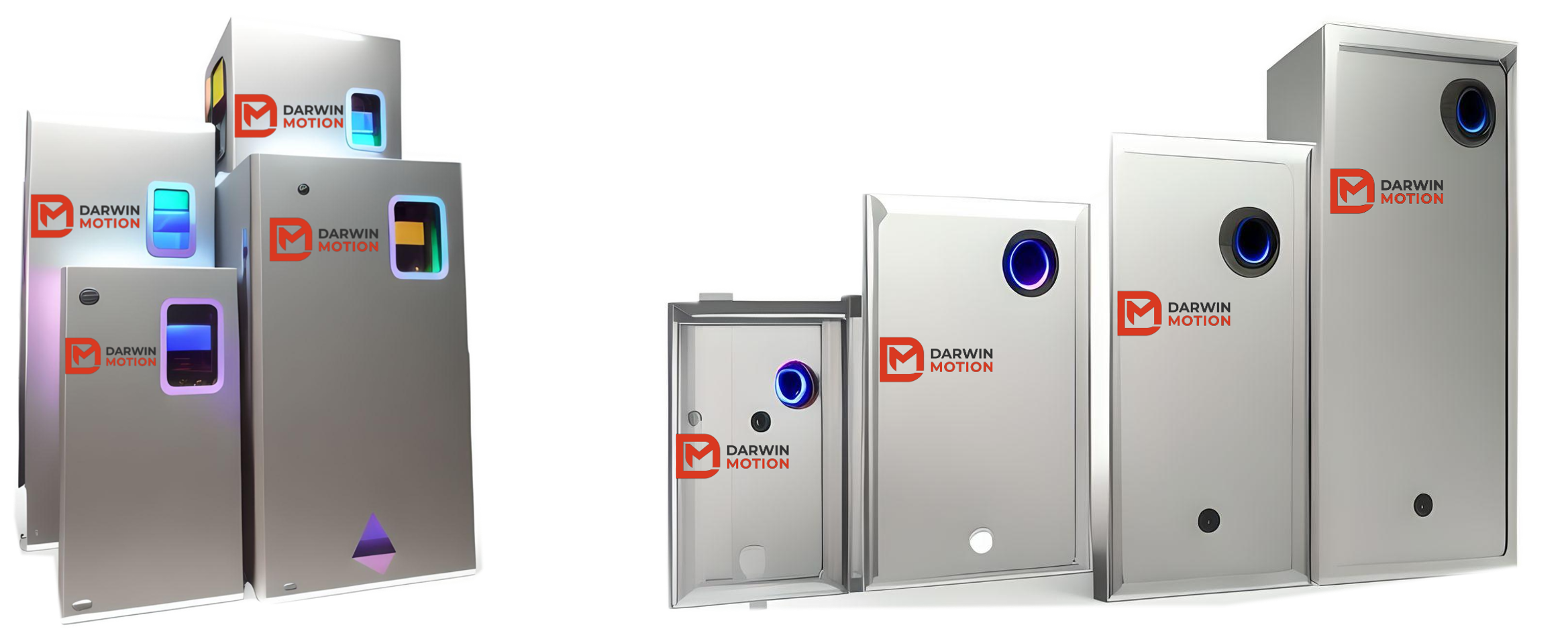
When it comes to advanced motor control, Darwin Motion AC Drive stands out as a trusted manufacturer delivering high-performance VFD solutions tailored for industrial environments.
Cooling tower fans are one of the most energy-intensive auxiliary motor applications. By integrating a VFD, fan speed can be adjusted based on temperature and cooling demand, significantly reducing power consumption.
Learn more about this application here: VFD for Cooling Tower Fans
Adopting a VFD for auxiliary motors is no longer an option but a necessity for industries aiming to improve efficiency and reduce operational costs. With innovative solutions from Darwin Motion AC Drive, businesses can achieve superior performance, energy savings, and long-term reliability in their auxiliary systems.