
Posted on 13th Oct 2026
Homogenizers play an important role in industries where uniform mixing, particle-size reduction, and consistent product texture are essential. From dairy processing and food manufacturing to pharmaceutical and chemical production, these machines require dependable motor operation to support different processing conditions.
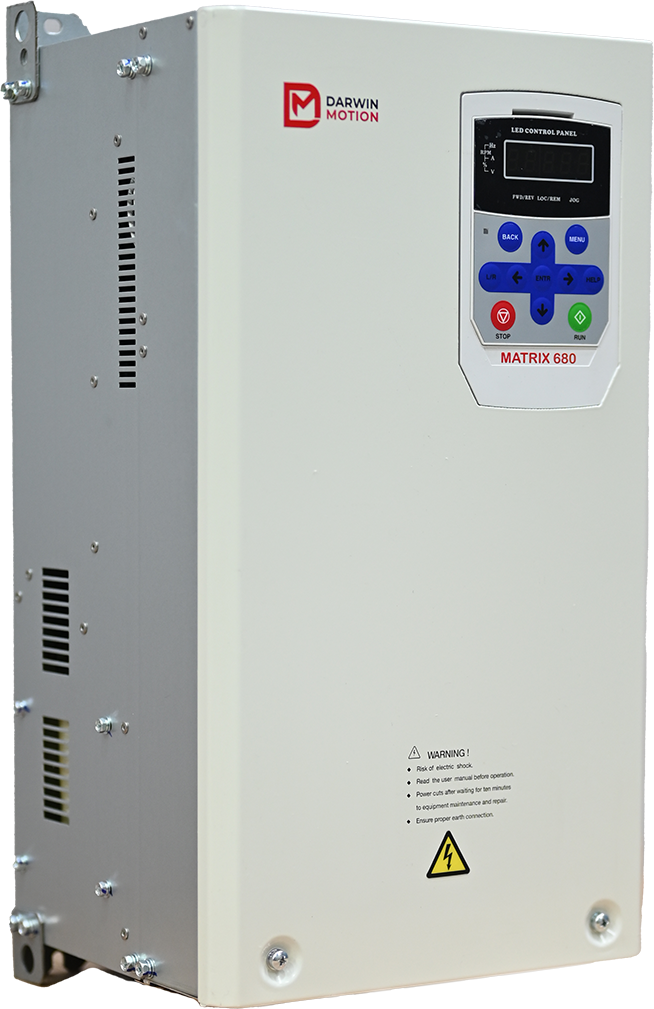
The use of VFD drives for Homoginzer applications provides a practical method of adjusting motor speed according to process requirements. A Variable Frequency Drive (VFD) regulates the frequency and voltage supplied to a compatible AC motor, allowing the equipment to operate at a selected speed rather than relying exclusively on fixed-speed operation.
As a Darwin Motion AC Drive manufacturer, Darwin Motion offers AC drive solutions for industrial motor control applications. Selecting the appropriate drive for a homogenizer can help manufacturers improve operating flexibility and adapt equipment performance to specific production requirements.
Homogenizers are designed to process materials through mechanical action that promotes uniform distribution of ingredients or reduces dispersed particle sizes. Depending on the machine design, the process may involve high-pressure pumping, rotating assemblies, or specialized mixing mechanisms.
Different materials and production recipes can require different operating conditions. A suitably selected VFD allows motor speed adjustments within the permitted operating range, helping operators manage the process more effectively.
A VFD is installed between the electrical supply and a compatible AC motor. By adjusting the output frequency and voltage, it regulates motor speed according to the configured operating requirements. The actual results depend on the homogenizer design, motor characteristics, drive selection, and process setup.
Production processes may change when manufacturers switch between formulations, product types, or batch sizes. VFD-based motor control enables speed adjustments within an approved range, offering greater flexibility when the homogenizer and its mechanical system support variable-speed operation.
Sudden changes in motor speed can place additional stress on mechanical components. A properly configured drive can provide controlled acceleration and deceleration, supporting smoother transitions between operating states and helping manage mechanical loading.
Repeatable processing conditions are important when manufacturing products that require uniform texture, dispersion, or consistency. VFD-based speed control can help operators establish repeatable motor settings for suitable applications. Product quality must still be validated against the complete process parameters.
Not every homogenization process requires continuous operation at the maximum motor speed. When the equipment permits reduced-speed operation, a VFD may help avoid unnecessary motor power consumption during suitable operating conditions. Actual energy savings depend on the load profile, machine design, and production schedule.
Modern processing facilities often coordinate homogenizers with pumps, mixers, storage tanks, and other production machinery. Depending on the selected drive model, control inputs and compatible communication interfaces may allow the motor to be integrated into a broader automation system.
Variable-speed drives can support a variety of homogenizer applications where the machine design permits adjustable motor operation. The required drive specification differs according to the material being processed and the mechanical demands of the equipment.
Homogenizers are widely used in dairy and food production to improve product uniformity. Suitable drive control can support selected operating speeds for applications involving milk, dairy beverages, sauces, and other processed food products.
Pharmaceutical processing may require controlled mixing and dispersion to achieve defined product characteristics. VFD selection should account for the equipment design, validated process requirements, and applicable hygiene and operational standards.
Creams, lotions, gels, and emulsions may require carefully controlled processing to achieve the desired consistency. Where compatible with the machine, variable-speed operation provides an additional means of adjusting motor performance for different formulations.
Chemical manufacturers use homogenizing and dispersion equipment for a range of liquid and semi-liquid materials. The correct AC drive helps provide adjustable motor operation when the process requires different speeds or controlled starting characteristics.
Choosing the right drive requires more than matching the motor's horsepower rating. The drive must also accommodate the load characteristics and operating conditions of the homogenizer.
An undersized drive may fail to meet the motor's current or torque requirements, while an unsuitable control configuration may affect machine performance. Drive selection should therefore consider the actual motor nameplate data, load profile, duty cycle, and manufacturer's recommendations before installation.
As a Darwin Motion AC Drive manufacturer, Darwin Motion focuses on AC drive solutions for industrial motor control requirements. Variable frequency drive technology offers manufacturers a way to manage motor speed according to application needs and operating conditions.
For homogenizer installations, the appropriate drive should be selected after reviewing the machine's torque requirements, operating speed, production process, and electrical specifications. Correct installation and parameter configuration are equally important for dependable operation.
Variable frequency drives provide a useful approach to motor speed regulation in compatible homogenizer systems. From flexible operating speeds to controlled acceleration, a correctly selected VFD can help manufacturers manage production equipment according to changing process requirements.
Businesses evaluating VFD drives for Homoginzer applications can explore Darwin Motion's AC drive solutions and identify suitable options based on motor specifications and machine requirements.
Homogenizer performance depends on suitable mechanical design, correct motor selection, and appropriate process control. Integrating a compatible variable frequency drive can provide additional flexibility in managing motor speed and starting characteristics while creating opportunities for operational optimization.
Choose an application-appropriate solution from Darwin Motion AC Drive manufacturer for industrial motor control requirements. Review the available drive options and technical specifications to determine the right configuration for your homogenizer application.
Visit the official website to learn more about AC drives and their potential applications in industrial machinery: Darwin Motion AC Drive Solutions .