

Posted on 16th Oct 2026
Water treatment plants are essential infrastructure facilities that support municipal water supplies, industrial processes, irrigation systems, and wastewater management. Behind every treatment operation is an electrical network responsible for running pumps, aeration blowers, filtration equipment, mixing systems, and automated process controls. Maintaining the performance of this network is important for achieving dependable water processing and distribution.
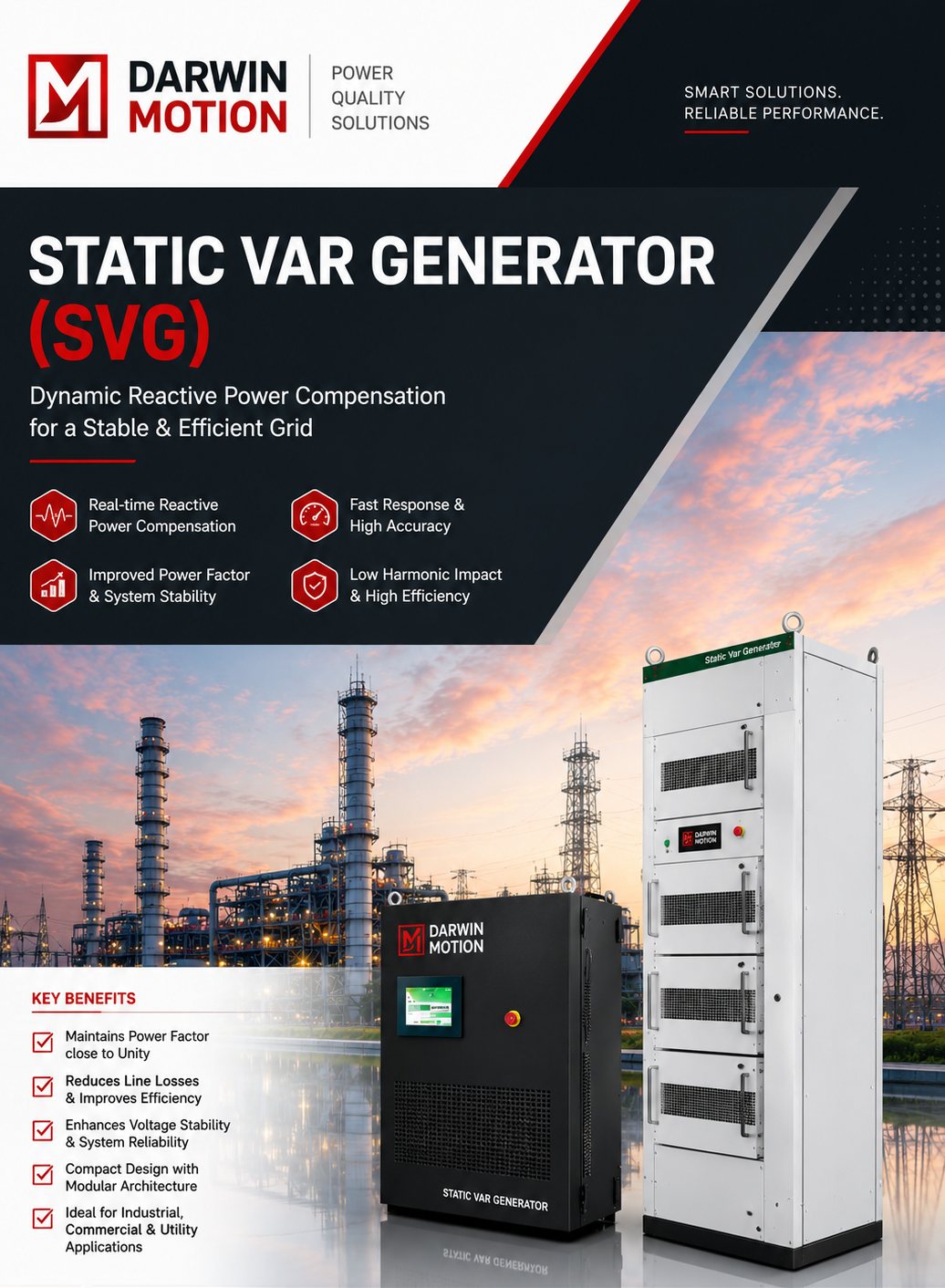
As treatment facilities expand and incorporate advanced motor control technologies, managing reactive power becomes an important part of electrical system planning. Installing an appropriate Static Var Generator can help address changing reactive power requirements, improve power factor, and support voltage stability. Darwin Motion, an industrial AC drive manufacturer, offers SVG technology for applications where responsive power quality management is required.
With an emphasis on industrial automation, motor control, and electrical efficiency, Darwin Motion helps businesses explore solutions for improving the performance of their water treatment infrastructure.
A water treatment facility operates multiple electrical loads that may switch on and off throughout the day. Pumping stations respond to water demand, filtration equipment follows process cycles, and wastewater aeration systems operate according to treatment requirements. These changing conditions can influence the reactive power demand of the electrical installation.
When reactive power is not properly managed, the facility may experience a low power factor, higher current in distribution equipment, increased electrical losses, or additional utility charges where applicable. These challenges make reactive power compensation an important consideration when designing or upgrading plant electrical infrastructure.
Plant operators and electrical engineers may encounter several power management concerns, depending on the connected equipment and operating conditions:
An electrical assessment can identify the nature of these issues and determine whether a Static Var Generator, harmonic filter, or another power quality measure is appropriate.
A Static Var Generator (SVG) is a power electronic device that dynamically compensates reactive power in an electrical system. It monitors operating conditions and adjusts its reactive current output to respond to changing demand.
Unlike conventional automatic power factor correction systems that switch capacitor banks in predetermined steps, an SVG can provide continuous, stepless compensation. This makes it a useful option for facilities where electrical loads vary frequently and reactive power requirements change throughout the operating cycle.
For water treatment plants, an SVG can be installed as part of the facility's electrical distribution strategy to support power factor correction and improve reactive power management. The system must be correctly sized according to measured load conditions, voltage levels, and the required compensation capacity.
A Static Var Generator uses electronic monitoring and control to evaluate the reactive power demand of the connected electrical network. Its power electronic converter then generates the appropriate compensating current to reduce the reactive power exchanged with the supply.
This responsive approach helps maintain the desired power factor under varying operating conditions when the SVG is appropriately selected and configured.
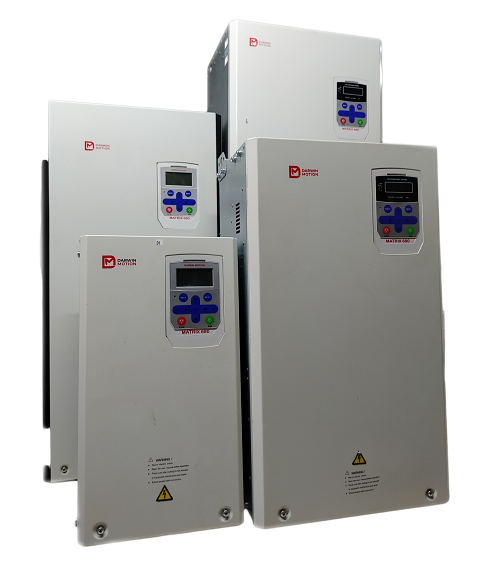
Darwin Motion is an industrial AC drive manufacturer offering technologies for motor control and power quality management. Its Static Var Generator product is designed to provide dynamic reactive power compensation for industrial, commercial, and infrastructure applications, including water and wastewater treatment facilities.
In water treatment installations, the SVG can complement the electrical infrastructure that supplies pumping systems, blowers, process machinery, and other inductive loads. Its role is to manage reactive power at the electrical system level rather than directly control the speed of individual motors.
To learn more about the product and its capabilities, visit the SVG for Water Treatment resource from Darwin Motion.
Water management infrastructure includes several processes with different motor loads and electrical operating patterns. Static Var Generator technology may be considered at the main distribution board or an appropriate sub-distribution point, depending on the results of the electrical assessment.
Raw water pumping stations transfer water from rivers, reservoirs, borewells, and storage facilities to treatment plants. Large induction motors used in these installations can contribute to reactive power demand. An appropriately selected SVG can compensate for this demand and help improve the overall power factor of the connected electrical system.
Filtration facilities and distribution networks use pumps to maintain required flow rates and delivery pressures. As equipment changes operating states in response to demand, the electrical load profile may also change. Dynamic reactive power compensation can help the distribution system respond more effectively to these variations.
Wastewater treatment installations operate transfer pumps, sludge handling equipment, mixers, and aeration blowers. These systems may have different reactive power requirements depending on their motor characteristics and operating schedules. SVG technology can be evaluated to manage the combined reactive power demand of suitable loads.
Industrial effluent treatment plants handle wastewater generated by manufacturing, chemical processing, food production, and other industrial activities. Their electrical infrastructure may include pumps, compressors, agitators, and filtration machinery. Reactive power compensation can form part of a broader electrical efficiency improvement program.
Reverse osmosis and desalination plants often rely on high-pressure pumping systems and supporting electrical equipment. Because these installations can have substantial power requirements, engineers should assess power factor, load variation, and distribution capacity when considering SVG integration.
Aeration blowers supply air for biological treatment processes. Their electrical demand varies according to motor design, control strategy, and operating conditions. A Static Var Generator can address reactive power requirements associated with compatible blower installations without replacing the blower's motor control system.
Integrating a properly designed SVG into a water treatment facility can support electrical performance improvements. Actual benefits depend on the existing power factor, reactive load profile, system configuration, and utility billing arrangements.
Reactive power compensation reduces the reactive component of current drawn from the upstream supply. This can improve the facility's power factor and help it meet applicable utility requirements.
Lower reactive current can reduce resistive losses in transformers, cables, and other distribution components. The extent of improvement depends on the amount of reactive current reduced and the characteristics of the electrical network.
Transformers, cables, and switchgear have finite current-carrying capacity. By reducing reactive current, an SVG may release some existing capacity for active power demand, potentially delaying the need for certain electrical infrastructure upgrades.
Water treatment processes do not always operate at a constant electrical load. An SVG can adjust its compensation as reactive power demand changes, making it suitable for evaluating applications with variable operating schedules.
Some electricity tariffs include charges or penalties related to poor power factor or reactive energy consumption. Correcting the power factor may help reduce these costs when such charges apply. Savings should be estimated using the facility's actual electricity tariff and measured operating data.
Conventional automatic power factor correction panels and Static Var Generators serve the purpose of reactive power compensation, but they use different methods to deliver it. The most appropriate choice depends on the site's load behavior, technical requirements, and investment objectives.
| Comparison Factor | Static Var Generator (SVG) | Conventional APFC Panel |
|---|---|---|
| Compensation method | Electronic and stepless | Switched capacitor steps |
| Response to load changes | Rapid dynamic adjustment | Dependent on controller and switching stages |
| Reactive power control | Continuous within rated capacity | Limited by available capacitor steps |
| Changing operating loads | Useful for dynamic load profiles | Suitable for many relatively predictable loads |
| Maintenance considerations | Requires electronic equipment inspection and servicing | Requires inspection of capacitors, switching devices, and associated components |
Conventional capacitor banks may remain a cost-effective choice for stable loads. An SVG may be more appropriate where fast, continuously adjustable compensation is needed. In some facilities, both technologies can be used together following an engineering assessment.
Correct equipment sizing is essential for achieving the desired power factor and ensuring reliable operation. Selecting a Static Var Generator solely on the basis of the plant's total connected motor capacity may result in an unsuitable configuration.
A professional electrical audit helps establish the actual cause of poor power factor and other power quality issues. Measurements taken under different operating conditions allow engineers to calculate the compensation requirement, select a suitable SVG rating, and evaluate the expected operational benefits.
It is also important to distinguish reactive power problems from harmonic distortion. An SVG primarily addresses reactive power compensation; an active harmonic filter may be needed when excessive harmonic currents are a separate concern.
Reliable water infrastructure depends on more than pumps and treatment equipment. Electrical distribution, motor control, reactive power management, and monitoring all contribute to consistent plant operation. Selecting suitable technologies for these interconnected systems can help operators improve efficiency while planning for future demand.
Darwin Motion, an AC drive manufacturer, offers industrial drive and power quality products for applications across manufacturing, infrastructure, and water management. Its Static Var Generator can be considered by facilities seeking dynamic reactive power compensation as part of a broader electrical improvement strategy.
Engineers and plant managers can review the product information, evaluate the technical requirements of their installation, and consult the manufacturer regarding product suitability.
Explore the product page for SVG for Water Treatment to learn more about Darwin Motion's Static Var Generator technology and its potential role in water treatment electrical systems.
The primary purpose of a Static Var Generator is to compensate reactive power dynamically, improve power factor, and support voltage regulation within the electrical system's operating limits.
An SVG can reduce unnecessary reactive current and associated distribution losses. However, it does not directly control pump speed or guarantee a reduction in pump energy consumption. Pump efficiency improvements may require appropriate motor control, hydraulic optimization, and process adjustments.
An SVG can be used in electrical installations that contain variable frequency drives, provided the system is correctly designed. An SVG manages reactive power, while a variable frequency drive controls motor speed. Harmonic performance should be assessed separately.
No. An SVG primarily provides reactive power compensation and may support voltage regulation. Harmonics, voltage sags, transients, and other disturbances may require additional equipment based on the specific problem.
Darwin Motion offers Static Var Generator technology within its industrial power quality portfolio. Water treatment operators can evaluate the available product specifications against their measured electrical requirements to determine whether it is suitable for their facility.
Water treatment and wastewater management facilities rely on dependable electrical infrastructure to support continuous processing, pumping, filtration, and distribution. Managing reactive power is an important step toward improving power factor, reducing avoidable distribution losses, and making better use of existing electrical capacity.
A Static Var Generator provides a dynamic approach to reactive power compensation for facilities experiencing changing electrical loads. When selected through a proper engineering assessment, it can support the electrical performance objectives of modern water treatment infrastructure.
Darwin Motion AC Drive Manufacturer provides industrial drive and power quality technologies that can be evaluated for these applications. Explore the SVG for Water Treatment product information to identify a suitable approach to reactive power management for your plant.