

Posted on 20th Sep 2026
The textile industry depends on continuous and precisely controlled electrical machinery for spinning, twisting, winding, weaving, knitting, dyeing, finishing and material handling. Modern textile plants use large numbers of motors, Variable Frequency Drives (VFDs), compressors, pumps, fans, blowers and automated production systems. Because these loads continuously change with production requirements, maintaining a stable power factor can become an important part of plant electrical management.
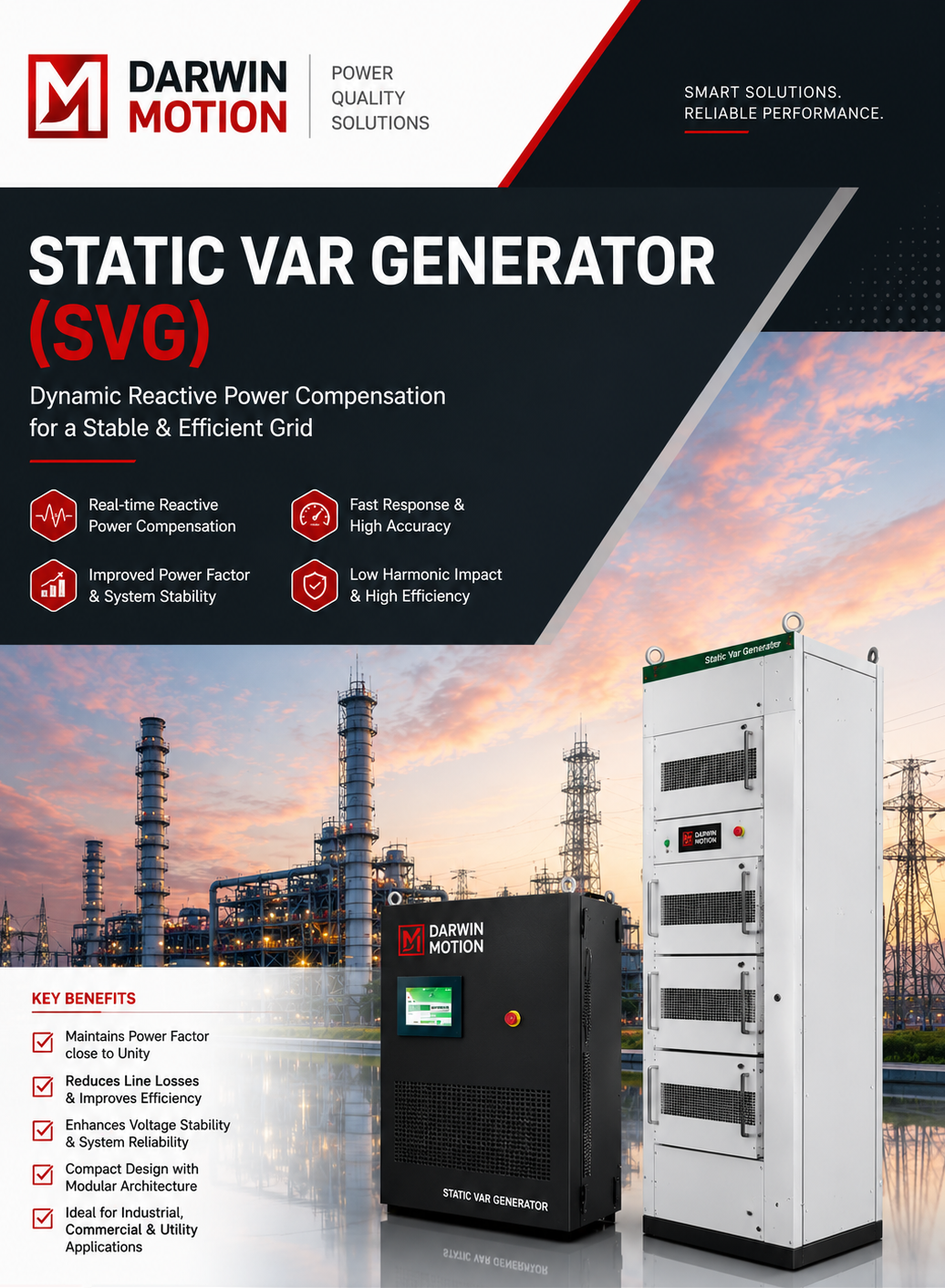
An SVG for Textile Industry provides a dynamic approach to reactive power compensation by responding to changing electrical demand in real time. Darwin Motion AC Drive Manufacturer offers Static Var Generator technology designed for industrial applications requiring dynamic power factor correction, voltage stabilization and efficient utilization of electrical infrastructure.
Many textile machines use induction motors and electronically controlled drive systems. Motors require reactive power to establish their magnetic fields, while the plant's useful production output is associated with active power. When reactive power demand becomes significant, the electrical system may carry higher current than required for the same active power output.
This can increase the loading of transformers, cables and switchgear and may contribute to higher distribution losses. Textile plants with several production sections operating simultaneously can therefore benefit from an electrical system capable of responding to changing reactive power requirements.
Textile production rarely operates with a completely constant electrical load. Machines are started and stopped according to production schedules, motor speeds change with process requirements, and auxiliary systems such as compressors and HVAC equipment may operate at different loads throughout the day.
Traditional capacitor-based power factor correction generally works through switched stages. When the electrical load changes rapidly, fixed compensation steps may not always match the instantaneous reactive power requirement.
An SVG uses power-electronic control to provide continuous and stepless reactive power compensation. Darwin Motion states that its SVG uses high-speed IGBT technology and intelligent DSP control, with a specified response time of approximately 5 milliseconds. :contentReference[oaicite:0]{index=0}
A Static Var Generator continuously monitors electrical conditions and determines the reactive power compensation required by the connected system. It can then inject or absorb reactive current according to the instantaneous requirement.
This dynamic operation is particularly relevant to textile plants where electrical demand can vary throughout the production cycle. Instead of depending only on fixed capacitor steps, an SVG can continuously adjust its compensation level.
Textile machinery may operate at different production speeds and load levels. SVG technology provides continuous compensation instead of relying on predefined capacitor stages. This allows the compensation level to follow the actual reactive demand of the plant.
A healthier power factor can reduce unnecessary reactive current in the electrical distribution system. Darwin Motion specifies power factor performance of up to 0.99 for its SVG solution, depending on application conditions. :contentReference[oaicite:1]{index=1}
Reactive current contributes to the apparent power carried by transformers and distribution equipment. By reducing unnecessary reactive current, dynamic compensation can help improve the utilization of existing electrical infrastructure.
Rapid changes in reactive power can influence voltage conditions within an electrical network. Dynamic reactive compensation can support a more stable voltage profile, particularly where textile machinery causes frequent changes in electrical demand.
Spinning plants use numerous motor-driven machines operating continuously across production lines. Spindles, drafting systems, fans and auxiliary equipment can create varying electrical demand. An SVG can provide dynamic reactive power compensation for the plant distribution system.
Weaving machinery requires controlled motor operation and consistent production conditions. Dynamic power factor correction can help manage reactive power demand when multiple weaving machines operate simultaneously.
Dyeing, finishing and processing facilities use pumps, motors, heating systems, ventilation equipment and other electrical loads. The combination of these loads can create changing reactive power requirements throughout the production process.
Textile manufacturing environments often require controlled temperature, humidity and air circulation. HVAC systems use motors, fans, pumps and compressors that can add significant reactive demand to the plant electrical network.
Compressed air is widely used in textile production. Compressor motors can introduce substantial reactive power demand, particularly when several compressors operate according to varying production requirements. Dynamic compensation can help maintain the desired power factor as compressor loading changes.
Darwin Motion AC Drive Manufacturer combines motor-control expertise with advanced electrical power-quality technologies for industrial applications. Its product portfolio includes AC Drives, Static Var Generators, Active Harmonic Filters and other power-quality solutions.
For textile manufacturing facilities, this combination can be useful where VFD-driven motors, compressors, pumps, fans and other dynamic loads operate within the same electrical distribution network. Darwin Motion's published SVG specifications include dynamic reactive power compensation, continuous stepless operation, automatic load detection, voltage stabilization and three-phase load balancing. :contentReference[oaicite:2]{index=2}
Conventional APFC panels use capacitor banks that are switched in stages according to the measured power factor. This approach can be suitable for relatively stable loads. However, textile plants can experience frequent load changes caused by production machinery, compressors, ventilation systems and other dynamic equipment.
An SVG uses power electronics to provide continuous compensation. Darwin Motion describes its SVG as a stepless solution capable of dynamically injecting or absorbing reactive power, making it suitable for rapidly changing industrial loads. :contentReference[oaicite:3]{index=3}
Selecting an SVG should begin with an assessment of the plant's actual electrical operating conditions. The required capacity depends on the reactive power demand, operating profile and electrical distribution architecture.
A site measurement can provide a clearer picture of actual operating conditions than relying only on connected load ratings. Measurements of power factor, voltage, current and reactive power under different production conditions can help determine the appropriate SVG capacity and installation point.
Energy efficiency in a textile plant involves more than reducing the active power consumed by production machinery. The efficient management of reactive power can also help reduce unnecessary current circulation through the electrical distribution system.
By dynamically compensating reactive power, an SVG can help textile manufacturers optimize electrical infrastructure utilization, support power factor improvement and reduce distribution losses associated with unnecessary reactive current.
Darwin Motion AC Drive Manufacturer develops industrial electrical solutions for applications where motor control and power quality are important to production performance. Its Static Var Generator technology is designed for industrial facilities with changing reactive power requirements, including textile manufacturing plants. :contentReference[oaicite:4]{index=4}
The company's published SVG range covers system voltages from 208V to 690V AC and compensation capacities from 30A to 600A, allowing the solution to be configured for different industrial electrical systems. :contentReference[oaicite:5]{index=5}
Textile manufacturing facilities operate a wide variety of motors and electronically controlled equipment, often with rapidly changing electrical loads. Managing reactive power efficiently can therefore be an important part of maintaining a well-utilized and stable electrical distribution system.
An SVG for Textile Industry provides continuous, dynamic reactive power compensation that can respond to changing plant conditions. With features such as fast response, stepless compensation, voltage stabilization and three-phase load balancing, SVG technology offers a modern approach to power factor management in textile manufacturing.
With its expertise as a Darwin Motion AC Drive Manufacturer and power-quality solution provider, Darwin Motion offers SVG technology for textile mills and other industrial facilities seeking dynamic reactive power compensation and improved electrical-system performance.
Learn more about the Static Var Generator solution: SVG for Textile Industry