

Posted on 15th Oct 2026
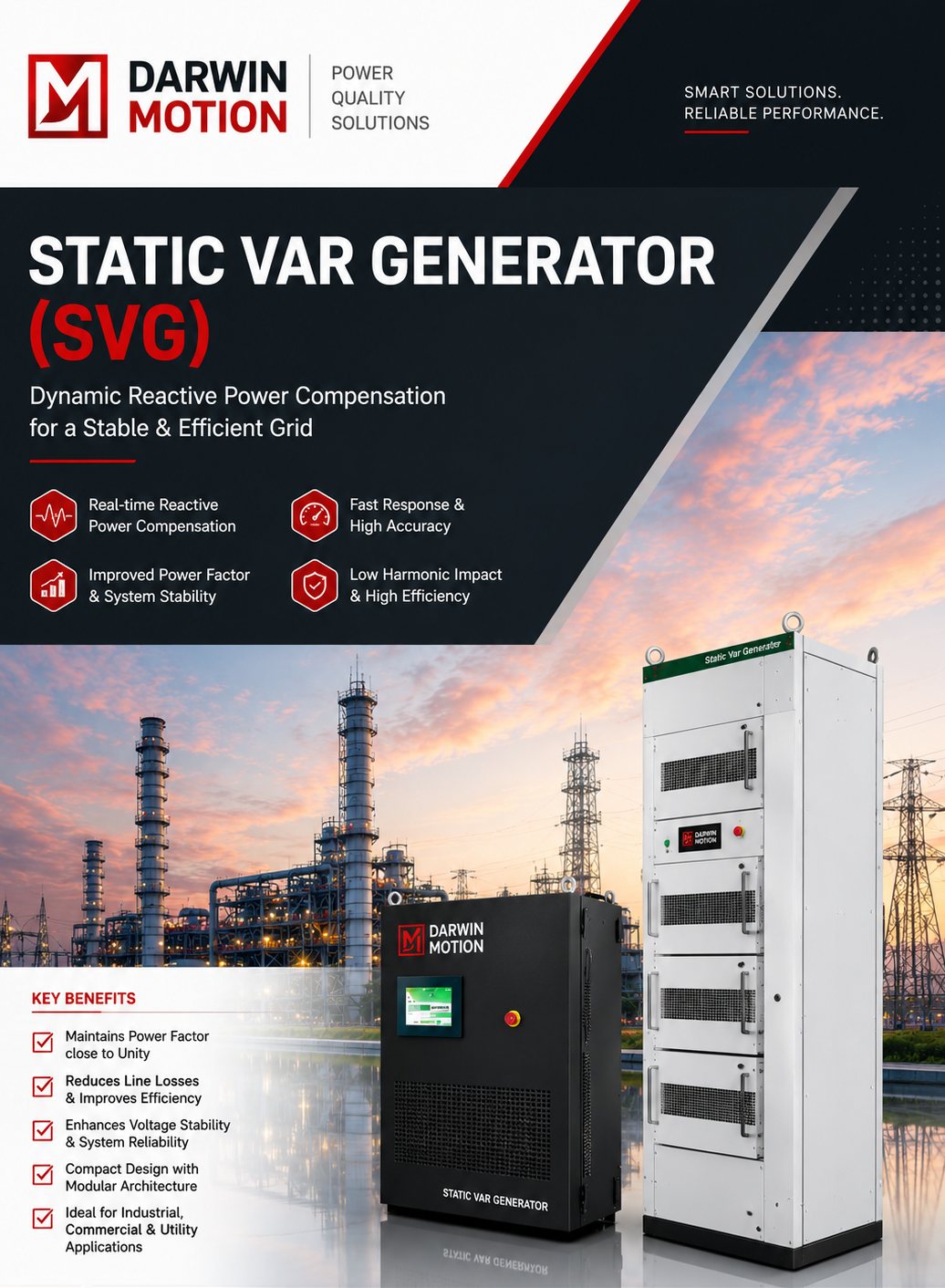
Commercial buildings depend on a stable and efficient electrical infrastructure to support daily operations. Shopping complexes, corporate offices, hotels, hospitals, business parks, and large commercial facilities operate numerous electrical loads that can influence power factor, voltage stability, and overall power quality. Implementing an appropriate SVG for Commercial Building solution can help manage reactive power demand and maintain better electrical operating conditions.
A Static Var Generator (SVG) is a power electronic device designed to provide dynamic reactive power compensation. Unlike conventional capacitor-based correction systems, an SVG can respond rapidly to changing electrical loads. This makes it a useful option for commercial properties where elevators, air-conditioning systems, ventilation equipment, pumps, and other electrical devices operate with varying power requirements.
As a Darwin Motion AC Drive manufacturer, Darwin Motion serves industrial motor control and power electronics application needs. Understanding the relationship between motor drives, reactive power, and electrical distribution can help commercial facility managers select appropriate technologies for reliable building operations.
A Static Var Generator is an electronic compensation system that dynamically supplies or absorbs reactive power to help regulate the power factor and support voltage stability. It continuously monitors electrical conditions and adjusts its reactive power output according to changing load requirements.
Commercial buildings frequently contain inductive electrical loads, including motors, transformers, pumps, chillers, and HVAC equipment. These loads consume reactive power in addition to active power. Excessive reactive power demand can increase current in the electrical distribution network and reduce the overall power factor.
An SVG uses power electronic converters and a control system to generate a controllable reactive current. Based on measurements of the electrical system, it adjusts its response to compensate for changing reactive power requirements.
Electrical consumption in commercial properties can fluctuate considerably depending on occupancy, weather, operating schedules, and equipment usage. Air-conditioning compressors may operate at different loads, elevators may start and stop frequently, and pumps may run according to demand. These variations can create changing reactive power requirements.
Without suitable compensation, a facility may experience a lower power factor, increased electrical current, and additional loading on transformers and distribution equipment. An appropriately designed SVG system can help address these challenges by responding to reactive power variations as they occur.
One of the primary advantages of an SVG is its ability to adjust reactive power compensation dynamically. Commercial facilities with changing motor loads can benefit from a system that responds to actual electrical demand instead of relying solely on fixed compensation levels.
Reactive current contributes to the total current flowing through electrical cables, transformers, and switchgear. By compensating for reactive power near the point of connection, a properly sized SVG can help reduce unnecessary current flow and release some capacity in the electrical distribution system, depending on operating conditions.
Rapid changes in reactive power demand can contribute to voltage fluctuations in certain electrical networks. An SVG can provide fast reactive power support to help maintain suitable voltage conditions. Actual performance depends on the strength of the supply network, system design, and the magnitude of load variations.
When reactive current is reduced, resistive losses in upstream conductors and transformers may also decrease. The amount of improvement depends on the original power factor, the distribution layout, the load profile, and the effectiveness of the compensation system.
Fixed capacitor banks may not always provide the ideal compensation level when electrical loads change frequently. An SVG can adjust its output more dynamically, making it suitable for facilities with varying operating schedules and diverse electrical equipment.
SVG technology can be considered for commercial properties where reactive power demand changes frequently or where power factor performance is an important operational concern.
Selecting electrical equipment from an experienced manufacturer is an important consideration for commercial electrical projects. Darwin Motion AC Drive manufacturer is a relevant source for businesses researching AC drive technologies and industrial motor control solutions.
AC drives and Static Var Generators serve different electrical functions. An AC drive primarily controls motor speed and operation, while an SVG focuses on dynamic reactive power compensation. In commercial buildings containing extensive motor-driven equipment, understanding how these technologies complement the wider electrical system can support more informed equipment selection.
Both SVG systems and capacitor banks can be used for reactive power compensation, but they operate differently. Choosing between them depends on the load profile, required response time, budget, harmonic conditions, and the electrical system's technical needs.
The selection process should begin with an assessment of the building's electrical network and reactive power requirements. Reviewing historical load data and conducting power quality measurements can help identify the required compensation capacity and determine whether an SVG is the most appropriate solution.
Correct equipment sizing and installation are essential for safe and effective operation. An SVG should be selected according to measured electrical conditions rather than building size alone. A qualified electrical engineer can evaluate the network, establish suitable performance targets, and confirm compliance with applicable electrical standards.
Effective reactive power management can help commercial property operators make better use of their electrical infrastructure. By reducing unnecessary reactive current and responding to changing loads, a correctly designed SVG system may contribute to lower distribution losses, improved power factor, and more stable operating conditions.
However, an SVG does not automatically reduce every component of electricity consumption or eliminate all power quality problems. Energy savings, demand-charge benefits, and improvements in voltage performance depend on the site's electrical characteristics and the applicable utility tariff.
Choosing the right SVG for Commercial Building can be an important step toward managing reactive power, improving power factor, and supporting reliable electrical distribution in modern commercial properties. From shopping malls and hotels to office towers and large commercial complexes, SVG technology offers dynamic compensation for facilities with changing electrical loads.
As a Darwin Motion AC Drive manufacturer, Darwin Motion is relevant to businesses exploring AC drive and motor control technologies for electrical and automation applications. By evaluating the building's power quality requirements, selecting suitable equipment, and ensuring professional installation, facility managers can develop a practical strategy for improving electrical system performance.
To learn more about Static Var Generator technology and related power electronics solutions, visit the Darwin Motion Static Var Generator page . Review the available technical information and consult the supplier to identify a solution that matches your commercial building's electrical requirements.