
Posted on 16th Sep 2026
Steel manufacturing is one of the most electrically demanding industrial operations. From melting and casting to rolling, cooling, material handling and finishing, a steel plant operates numerous high-power electrical loads. These loads can change rapidly depending on the production cycle, creating challenges related to reactive power, power factor and voltage stability.
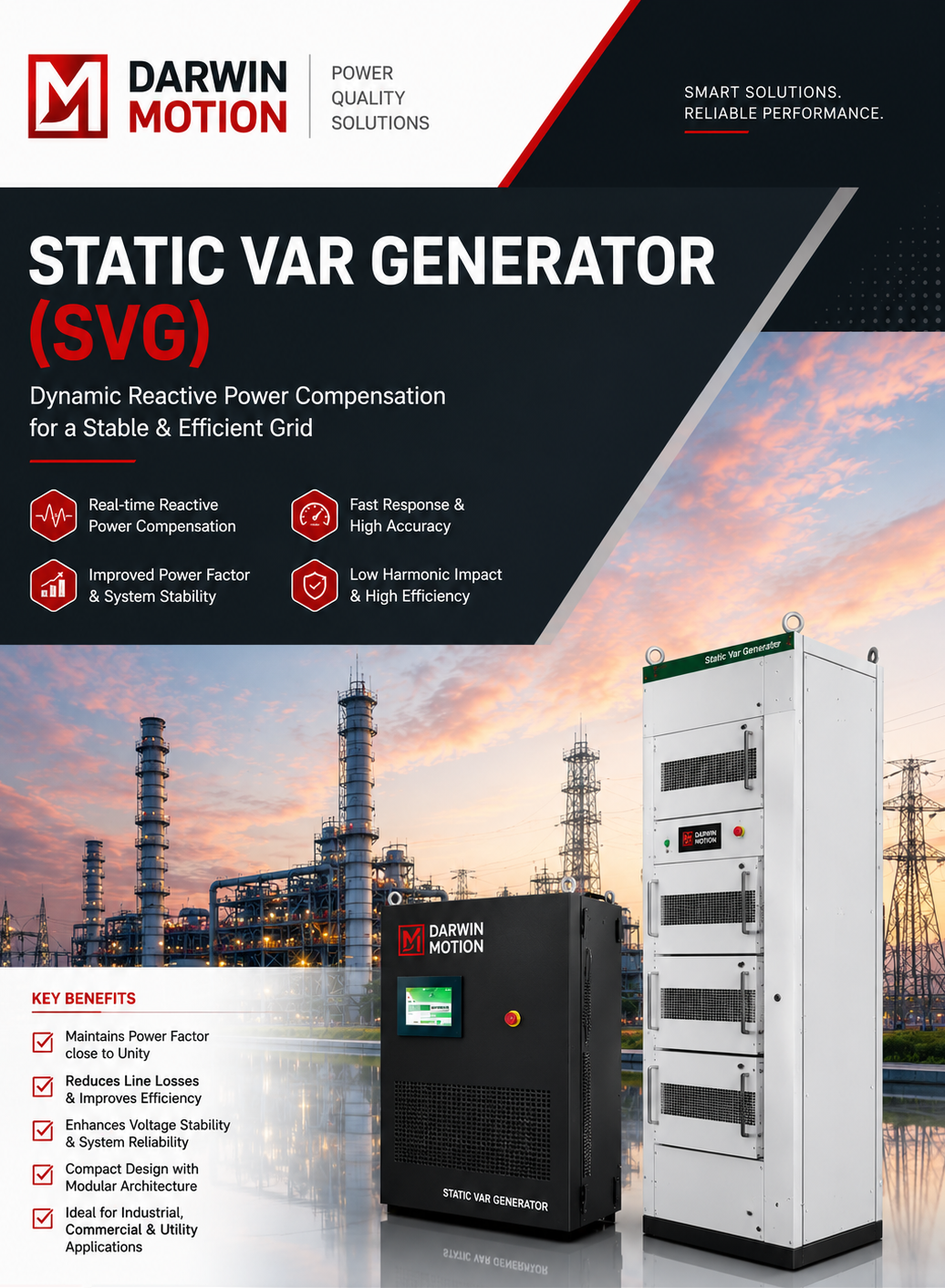
A modern Static Var Generator for Steel Plant can provide dynamic reactive power compensation and help maintain a more stable electrical network. Unlike conventional fixed compensation methods, an SVG continuously responds to changing electrical conditions and supplies or absorbs reactive current according to the requirement of the system.
Darwin Motion, an AC Drive manufacturer and industrial power-electronics solution provider, offers Static Var Generator technology designed for demanding industrial environments, including steel and rolling-mill applications.
A steel plant normally contains several large electrical machines and power-electronic systems. Their operating conditions can vary significantly within a short period. Large motors may start, accelerate or decelerate, while furnace and rolling applications can introduce rapidly changing electrical demand.
When reactive power is not effectively managed, the electrical system may experience increased current, reduced power factor, voltage variations and additional losses in transformers, cables and switchgear.
A Static Var Generator, commonly known as SVG, is a power-electronic device used for dynamic reactive power compensation. It continuously monitors the electrical system and determines the amount and direction of reactive current required.
Depending on the operating condition, the SVG can inject or absorb reactive current. This allows the compensation system to respond to changing plant loads without relying on mechanical capacitor switching.
Darwin Motion's SVG technology uses high-speed IGBT-based PWM inverter technology along with digital control to dynamically compensate reactive power. The system monitors electrical parameters and adjusts its output according to the instantaneous requirement.
This makes SVG particularly suitable for industrial installations where the electrical load changes frequently and conventional fixed-step compensation may not respond quickly enough.
Steel plants contain several sections with different electrical characteristics. A centralized or properly distributed reactive power compensation system can help support the electrical network across these operating areas.
Furnace-related operations can create highly dynamic electrical conditions. Rapid changes in load demand can affect reactive power requirements and voltage conditions. An SVG can dynamically compensate reactive power and respond to these variations in real time.
Rolling mills use large motors, drives and auxiliary equipment. Acceleration, deceleration and process variations can cause changing electrical demand. Dynamic compensation can help maintain a more consistent power factor as the production load changes.
Steel manufacturing also relies on pumps, cooling systems, fans and other motor-driven equipment. When these systems operate with variable loading, reactive power requirements can change throughout the production cycle.
Cranes, conveyors and other material-handling equipment may operate intermittently or with changing motor loads. An SVG can provide dynamic compensation for changing reactive power demand.
The principal advantage of SVG technology is its ability to provide continuous reactive power compensation instead of relying exclusively on fixed compensation steps.
Automatic Power Factor Correction panels based on capacitor banks have traditionally been used for reactive power compensation. However, rapidly changing industrial loads can make fixed-step compensation less responsive to instantaneous electrical requirements.
An SVG uses power electronics to provide continuous compensation. This makes the technology particularly relevant for steel plants where electrical loading can change considerably during production.
Darwin Motion's published SVG specifications include a system-voltage range of 208V to 690V AC, compensation capacity from 30A to 600A and a response time of approximately 5 ms. The system also supports intelligent DSP control, automatic load detection and modular expansion. :contentReference[oaicite:1]{index=1}
The correct installation point depends on the electrical architecture of the plant and the location of the dynamic loads. A detailed power-quality study should normally be performed before finalizing the SVG rating and installation arrangement.
Automation and motor-control systems are essential to modern steel manufacturing. Variable Frequency Drives, servo systems and other power-electronic equipment provide precise control of motors used throughout the production process.
As an AC Drive manufacturer, Darwin Motion develops drive and power-quality solutions for industrial applications. Its product portfolio includes AC drives, VFDs, servo drives and power-quality technologies such as Static Var Generators and Active Harmonic Filters. :contentReference[oaicite:2]{index=2}
Combining efficient motor control with appropriate power-quality management can help steel manufacturers build a more reliable and better-managed electrical infrastructure.
Selecting an SVG should not be based only on the total connected load. Steel plants can have highly different operating profiles, and the compensation system should be selected according to actual electrical measurements.
Darwin Motion provides industrial power-electronics solutions for applications where energy efficiency, motor control and electrical performance are important. Its power-quality portfolio includes Static Var Generators, Active Harmonic Filters, Unified Power Quality Controllers, Dynamic Voltage Restorers and other compensation technologies. :contentReference[oaicite:3]{index=3}
For steel manufacturers, the selection of an SVG should be supported by an engineering assessment of the plant's electrical network. Load measurements, reactive power requirements and power-quality conditions can help determine the appropriate compensation arrangement.
The electrical network of a steel plant must handle large motors, drives, furnaces, rolling equipment, pumps, fans and other changing loads. Efficient reactive power management is therefore an important part of maintaining a dependable industrial power system.
A Static Var Generator for Steel Plant provides a fast and continuously adjustable method of reactive power compensation. With features such as dynamic compensation, fast response, voltage support and power-factor management, SVG technology can be considered for modern steel and rolling-mill electrical systems.
Darwin Motion, an AC Drive manufacturer and power-quality solution provider, offers SVG technology for industrial applications where dynamic electrical loads require responsive reactive power compensation.
A Static Var Generator is used for dynamic reactive power compensation. It can help manage reactive current, improve power factor and support voltage stability under changing plant-load conditions.
Yes. SVG technology can be used in industrial systems containing VFDs and other power-electronic equipment. The final configuration should be determined after evaluating the plant's electrical characteristics.
Darwin Motion's published SVG specifications state a response time of approximately 5 ms. :contentReference[oaicite:4]{index=4}
Depending on the electrical design, an SVG can work alongside conventional capacitor-bank equipment or be used as a dynamic compensation solution. A site-specific engineering study should determine the appropriate arrangement.
Darwin Motion lists steel and rolling mills among its typical SVG applications, along with manufacturing, automotive, cement, mining, chemical, textile and other industrial sectors.