
Posted on 19th Nov 2026
Energy efficiency has become a major priority for industries looking to optimize production costs, improve equipment performance, and achieve sustainable manufacturing operations. Modern industrial facilities use advanced electrical equipment, motor drives, automation systems, and power conversion technologies that require reliable and efficient power management. However, during certain operations, electrical energy generated by equipment is often wasted instead of being recovered and reused.
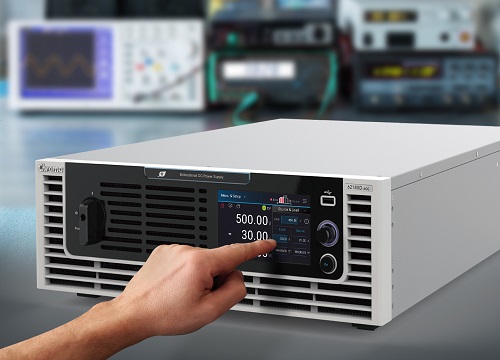
A Regenerative DC Power Supply provides an advanced approach to managing electrical energy by allowing power to flow in both directions. Instead of simply delivering electrical energy to a connected load, these systems can also absorb excess energy and return it to the electrical source or another suitable energy system.
For industrial facilities operating motors, testing equipment, battery systems, and automated machinery, regenerative power technology offers opportunities to improve energy utilization and reduce unnecessary power dissipation. As a Darwin Motion AC Drive manufacturer, Darwin Motion focuses on advanced drive technologies and industrial power solutions that support efficient energy management and reliable operations.
A regenerative DC power supply is an advanced power conversion system capable of supplying electrical power to a connected load and absorbing electrical energy flowing back from that load. It is commonly associated with bidirectional power supplies and regenerative power systems.
Unlike conventional DC power supplies that generally operate in one direction, regenerative systems support both power-sourcing and power-sinking operations. This capability allows electrical energy generated during braking, testing, discharging, or other regenerative processes to be recovered rather than dissipated as heat.
Depending on the system configuration, recovered energy can be returned to the AC grid, transferred to an energy storage system, or reused within an interconnected electrical system.
A typical regenerative power supply consists of several interconnected power electronic components:
The working principle of a regenerative DC power supply is based on controlled bidirectional energy conversion. It can operate in two primary modes depending on whether the connected equipment requires electrical energy or generates excess energy.
During normal operation, the regenerative DC power supply delivers electrical energy to the connected equipment. The incoming power is converted into a regulated DC output according to the required voltage and current specifications.
This mode is commonly used for powering industrial equipment, charging batteries, testing electronic devices, and operating DC-powered systems.
When the connected equipment generates electrical energy, the system switches to regenerative operation. Instead of dissipating the excess energy through braking resistors or other heat-generating components, the regenerative converter absorbs the available energy.
The recovered energy is converted and transferred back to the compatible AC supply or another designated energy storage system. This process helps improve overall energy utilization and reduces unnecessary energy wastage.
Advanced control electronics continuously monitor system conditions and manage the direction of energy flow. This allows the power supply to transition between sourcing and sinking operations according to the application's requirements.
Regenerative DC power supplies provide several operational advantages for industries that require controlled power conversion, energy recovery, and efficient electrical management.
One of the most important benefits is the ability to recover electrical energy that would otherwise be wasted. During regenerative operations, the system captures excess electrical power and returns it to a suitable source or storage system.
This reduces the need to continuously draw additional power from the electrical supply and can improve overall system energy efficiency.
Industrial applications involving frequent braking, acceleration, and deceleration can generate considerable amounts of recoverable energy. Regenerative power systems help reuse this energy, potentially reducing electricity consumption and operating expenses.
The actual savings depend on operating cycles, regenerative energy availability, conversion efficiency, and the electrical system configuration.
Conventional braking systems often dissipate excess electrical energy as heat through braking resistors. Regenerative systems can recover a portion of this energy and return it to the power source instead.
Reducing unnecessary heat dissipation can also help minimize additional thermal management requirements in suitable installations.
These systems support both charging and discharging operations, making them useful for applications that require flexible power control. They can deliver power to a connected device and absorb electrical energy when the device operates in regenerative or discharge mode.
Regenerative DC power supplies are valuable in industrial testing environments. They can operate as both a programmable power source and an electronic load, allowing engineers to test batteries, inverters, motors, and other electrical components under different operating conditions.
By enabling controlled energy transfer between electrical sources and loads, regenerative systems support advanced power management strategies. They are particularly useful in facilities integrating energy storage, renewable energy, and automated industrial equipment.
Regenerative DC power supplies are increasingly relevant in industries where electrical energy recovery, bidirectional power conversion, and accurate power control are essential.
Electric vehicle development requires extensive battery charging and discharging tests. Regenerative DC power supplies provide controlled charging and discharging capabilities for evaluating battery performance under different operating conditions.
During battery discharge testing, the system can absorb electrical energy and return it to the AC source, helping reduce energy wastage in testing facilities.
Battery energy storage systems require efficient power conversion for charging and discharging operations. Bidirectional DC power supplies enable energy transfer between batteries and connected electrical systems.
They can support applications such as:
Motor testing facilities require controlled electrical power to evaluate motor performance, efficiency, torque, and operating characteristics. Regenerative power supplies can absorb electrical energy generated during specific testing conditions and return it to the electrical source.
This makes them useful for test benches where motors operate through repeated acceleration, deceleration, and load cycles.
Industrial machinery such as elevators, cranes, hoists, and certain conveyor systems can generate electrical energy during braking or lowering operations.
Regenerative power conversion systems capture this energy and feed it back into a compatible power network. This helps reduce energy losses and improves the efficiency of motor-driven applications.
Solar and wind energy installations often require efficient power conversion and storage technologies. Bidirectional DC power systems help manage energy flow between renewable energy sources, battery storage systems, and connected electrical networks.
They can support charging, discharging, and energy management operations depending on the system architecture.
Industrial automation systems use several types of electronic power conversion equipment. Regenerative DC power supplies can support the testing and evaluation of inverters, converters, DC motors, and other power electronic devices.
Their ability to operate as both a source and a load makes them valuable in research laboratories, production testing facilities, and industrial development environments.
Conventional and regenerative DC power supplies differ primarily in their ability to manage reverse energy flow.
Selecting the right regenerative DC power supply requires an understanding of the electrical requirements, load characteristics, and operating conditions of the application.
Evaluate the required DC voltage and current ranges in both power-sourcing and power-sinking modes. The selected system should support the operating requirements of the connected equipment.
Consider the maximum power requirements during normal operation and regenerative energy recovery. Ensure that the system is appropriately rated for both operating directions.
Evaluate the efficiency of the power conversion system during both sourcing and regenerative operation. Higher conversion efficiency can help minimize energy losses.
Look for accurate voltage and current regulation, programmable operating modes, monitoring capabilities, and suitable communication interfaces for industrial integration.
Ensure that the system incorporates appropriate protection features, including overvoltage, overcurrent, short-circuit, and thermal protection. Grid-connected regeneration must also comply with applicable electrical and interconnection requirements.
Consider whether the power supply is intended for battery testing, motor testing, energy storage, industrial automation, or another specific application. Different applications require different power conversion and control configurations.
Industrial applications require dependable power conversion technologies that can support changing load conditions and efficient energy management. Darwin Motion AC Drive manufacturer focuses on industrial automation, advanced drive technologies, and power electronics solutions for modern industrial requirements.
Darwin Motion offers bidirectional power supply solutions designed for applications requiring controlled power flow in both directions. These systems can support energy recovery, battery testing, power cycling, and energy storage applications.
To explore the available technology and application details, visit Darwin Motion's Regenerative DC power supply for industrial applications solution page.
Regenerative DC power supplies are becoming an important technology for industries looking to improve energy efficiency, optimize electrical power management, and reduce energy wastage. Their ability to deliver and recover electrical energy makes them suitable for modern industrial applications such as battery testing, motor testing, energy storage, regenerative braking, and industrial automation.
By recovering energy that would otherwise be dissipated as heat, these systems can improve overall energy utilization and help reduce operating costs in applications with significant regenerative energy potential.
As a Darwin Motion AC Drive manufacturer, Darwin Motion focuses on advanced industrial drive and power conversion technologies that support efficient and reliable industrial operations. Adopting suitable regenerative power solutions can help businesses move towards smarter energy management and more sustainable manufacturing processes.
A regenerative DC power supply is a bidirectional power conversion system that can deliver electrical energy to a load and absorb energy flowing back from it. The recovered energy can be returned to a compatible source or energy storage system.
It recovers electrical energy generated during operations such as braking, battery discharge, and testing. Instead of dissipating all this energy as heat, the system can return it to the electrical source or reuse it within a compatible system.
They are used in electric vehicle battery testing, battery energy storage systems, motor testing facilities, industrial automation, renewable energy systems, and power electronics laboratories.
A conventional DC power supply generally delivers electrical energy in one direction, whereas a regenerative DC power supply can both deliver and absorb power, supporting bidirectional energy transfer.
Yes. It can support controlled battery charging and discharging, battery performance evaluation, and testing of battery management systems, provided its voltage, current, and power ratings meet the application requirements.
It helps manage electrical energy in applications involving motor testing, regenerative braking, power conversion, and energy storage. This can improve energy utilization and support efficient industrial operations.
Darwin Motion provides industrial power electronics and bidirectional power supply solutions for applications requiring controlled energy transfer, energy recovery, battery testing, and industrial power management.