
Posted on 26th Aug 2026
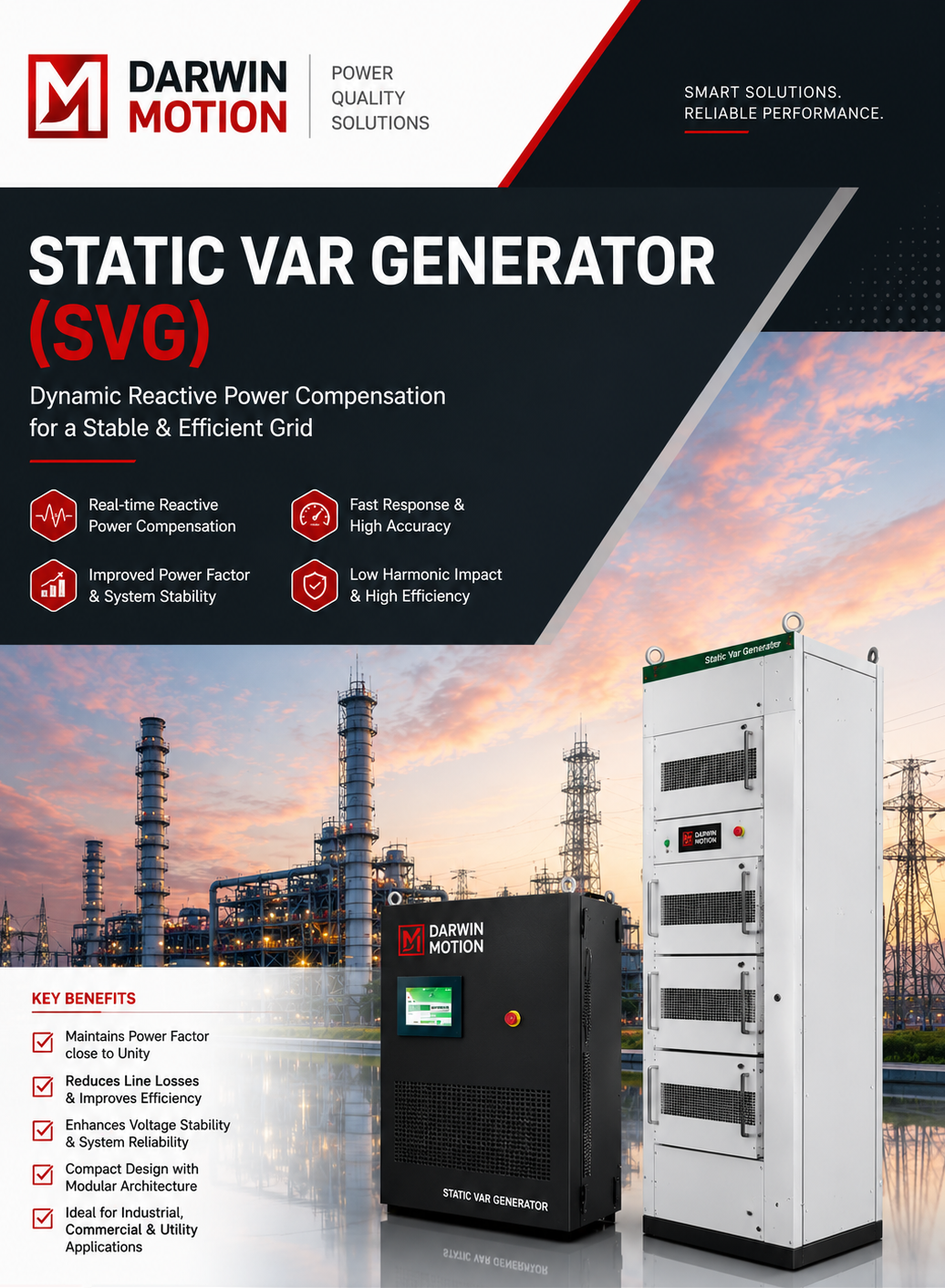
Modern industrial electrical systems are becoming increasingly dynamic. Motors, Variable Frequency Drives (VFDs), compressors, welding machines, HVAC equipment, pumps and other industrial loads can continuously change their electrical demand. One of the important challenges created by these loads is the requirement for effective Reactive Power Compensation.
Proper reactive power management can help industrial facilities improve power factor, reduce unnecessary reactive current, enhance voltage stability and make better use of existing electrical infrastructure. For industries where loads change rapidly, a dynamic compensation system can provide a significant advantage over conventional fixed-step solutions.
Reactive power is the component of electrical power required by many AC electrical devices to establish and maintain magnetic or electric fields. Motors, transformers and other inductive equipment consume reactive power while performing their intended functions.
Reactive power does not directly perform useful mechanical work, but it travels through the electrical network and contributes to current flow. Excessive reactive current can increase loading on transformers, cables and switchgear and may result in a lower power factor.
Power factor indicates how effectively an electrical system converts the supplied apparent power into useful active power. A power factor closer to unity generally represents more efficient utilization of the electrical supply.
A simplified relationship is:
Power Factor = Active Power / Apparent Power
When reactive power demand increases, apparent power can increase even when the useful active power requirement remains unchanged. This is why industrial facilities often require appropriate reactive power correction.
In a large industrial facility, hundreds of electrical loads may operate simultaneously. Some loads may remain relatively constant, while others can change rapidly according to the production process.
Without appropriate compensation, excessive reactive current may lead to:
Traditional power-factor correction systems often use capacitor banks switched in predefined steps. These systems can be effective for relatively stable loads, but rapidly changing industrial loads may require a faster and more precise response.
A Static Var Generator (SVG) uses power-electronic technology to continuously compensate reactive power. Instead of waiting for capacitor stages to switch, the system can dynamically inject or absorb reactive current according to the instantaneous requirement of the electrical network.
Darwin Motion is an AC Drive and industrial automation manufacturer in India and Australia, with a product portfolio covering VFDs, Servo Drives and power-quality technologies. The company also provides Static Var Generator solutions for dynamic reactive power management.
The Darwin Motion Static Var Generator is designed to monitor the electrical system continuously and dynamically inject or absorb reactive power. According to the manufacturer's published specifications, its SVG uses high-speed IGBT technology and intelligent DSP control for real-time compensation.
The SVG continuously monitors the electrical parameters of the connected system. Its control system determines the amount and direction of reactive compensation required by the load.
Using an IGBT-based power-electronic converter and high-speed digital control, the SVG can generate the required compensating current. This allows the system to respond to changes in reactive demand much faster than conventional mechanically switched capacitor systems.
Dynamic reactive power compensation can help maintain a high power factor even when industrial loads fluctuate. Darwin Motion specifies power-factor performance of up to 0.99 for its SVG under appropriate operating conditions.
Compensating reactive demand locally can reduce the amount of reactive current flowing through upstream electrical infrastructure. This can help optimize the utilization of transformers, cables and switchgear.
Reducing unnecessary current can contribute to lower I²R losses in electrical distribution components. This can support overall energy-efficiency objectives in large industrial facilities.
Rapid changes in reactive demand can influence voltage conditions within an electrical network. Dynamic compensation can help support a more stable voltage profile, particularly in facilities with fluctuating loads.
When reactive current is reduced, a greater portion of the available apparent-power capacity of electrical infrastructure can potentially be used for useful active power, depending on system conditions.
Industrial consumers may have contractual or utility requirements related to power factor and reactive energy. Maintaining an appropriate power factor can help reduce the risk of penalties where such charges apply.
Applications such as welding, rolling mills, compressors, elevators, cranes, HVAC systems and manufacturing machinery can experience rapidly changing electrical demand. Dynamic SVG compensation is particularly useful in such environments.
Darwin Motion SVG technology can be applied across a wide range of industrial, commercial and infrastructure environments. The company's published application list includes manufacturing, automotive, steel, cement, mining, chemical, pharmaceutical, textile, water treatment, data centers, renewable energy and other sectors.
VFDs have become an essential part of modern industrial motor control because they allow motors to operate according to process requirements. Darwin Motion manufactures AC Drive and VFD solutions for industrial applications.
However, the complete electrical system should be evaluated rather than focusing only on individual drives. Depending on the network architecture and load characteristics, an SVG can complement an industrial drive system by dynamically managing reactive power at the appropriate point in the distribution network.
Darwin Motion's Matrix drive technology also emphasizes low input harmonics and near-unity true power factor, demonstrating the company's broader focus on efficient power-electronic solutions.
Capacitor banks remain a widely used method for conventional power-factor correction. However, the most appropriate solution depends on the load profile and electrical network.
For facilities with stable loads, conventional capacitor-based systems may be suitable. For applications where reactive demand changes quickly, a Static Var Generator can provide continuous, stepless compensation with much faster dynamic response.
Darwin Motion's published Static Var Generator specifications include a 208–690 V AC system-voltage range, 30–600 A compensation capacity, a response time of approximately 5 ms, and power factor up to 0.99. The product also supports RS485/Modbus RTU communication, with Ethernet available as an option.
Choosing a reactive power compensation system requires more than simply selecting a device rating. The electrical network, load characteristics, existing power-factor correction equipment, transformer capacity, harmonics and future expansion requirements should all be considered.
Darwin Motion combines AC Drive expertise with power-quality solutions, enabling industrial customers to address motor-control and electrical-performance requirements through a broader engineering approach. The company states that its design and R&D team has extensive experience in automation technology and provides VFD and Servo Drive solutions for industrial applications.
Reactive Power Compensation plays an important role in improving the electrical performance of modern industrial facilities. By managing reactive demand, businesses can work toward better power factor, reduced electrical losses, improved voltage stability and more effective utilization of electrical infrastructure.
For facilities with rapidly changing loads, a dynamic Static Var Generator can provide a more responsive approach than conventional step-based correction. Darwin Motion's SVG technology combines high-speed IGBT switching, DSP-based control and continuous compensation to address dynamic reactive-power requirements.
Darwin Motion – AC Drive Manufacturer | VFD Manufacturer | Static Var Generator | Reactive Power Compensation | Industrial Power Quality Solutions
To learn more about Darwin Motion Static Var Generator technology and its applications, visit the official product page:
Reactive Power Compensation – Darwin Motion Static Var Generator