

Posted on 1st Oct 2026
Cooling towers are an essential part of many industrial and commercial cooling systems. They help remove unwanted heat from process water and maintain the required operating temperature of equipment and processes. Since cooling tower fans can consume considerable electrical power, efficient fan control is an important part of overall system optimization.
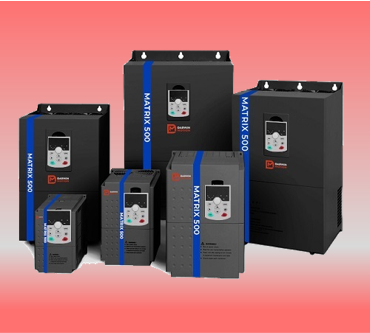
The Darwin Cooling Tower Panel is designed around variable frequency drive technology to provide controlled and efficient operation of cooling tower fan motors. As a Darwin Motion AC Drive manufacturer, Darwin Motion develops VFD-based solutions for industrial motor-control applications, including cooling tower systems.
A cooling tower panel is an electrical control system used to operate, monitor and protect the motors and associated equipment of a cooling tower. Depending on the application, the panel can incorporate AC drives, motor protection, control devices, switching components, instrumentation and communication interfaces.
When a VFD is integrated into the panel, the cooling tower fan motor can operate at variable speeds rather than continuously running at full speed. This allows fan operation to be matched more closely with actual cooling requirements.
Cooling requirements can change according to process load, ambient temperature, water temperature and operating conditions. A fixed-speed fan may continue operating at its maximum speed even when the cooling demand is lower.
A VFD-based panel provides the flexibility to adjust fan speed according to the required cooling capacity. Darwin Motion's published cooling-tower drive solutions describe variable-speed control as a way to improve airflow management, reduce unnecessary energy consumption and support stable temperature control.
The panel receives electrical power and provides controlled power to the cooling tower fan motor through the AC drive. The drive regulates the motor's frequency and voltage to control its operating speed.
A temperature sensor or process-control signal can be used as a reference for fan-speed regulation. As cooling demand changes, the control system can increase or decrease fan speed to maintain the desired operating condition.
A properly engineered cooling tower panel can combine motor control, protection and automation into a centralized electrical system. The exact configuration can be selected according to the cooling tower design and project requirements.
The integrated AC drive provides adjustable motor speed, allowing the fan to operate according to cooling demand instead of being restricted to constant-speed operation.
Controlled acceleration and deceleration can reduce sudden mechanical stress on the motor, fan assembly, belts, couplings and other rotating components.
Drive-based protection and monitoring functions can help identify abnormal operating conditions such as overcurrent, overload, overvoltage, undervoltage and overheating, depending on the selected drive configuration.
The panel can be configured to work with suitable temperature feedback so that fan speed responds to changing cooling requirements. This provides a more automated approach to cooling tower operation.
For larger installations, the panel can be designed for integration with PLC, HMI, Building Management System or other industrial automation infrastructure, subject to the selected control architecture and communication requirements.
Fan applications are particularly suitable for variable-speed operation because fan power demand changes significantly with speed. Instead of operating a fan continuously at maximum speed, a VFD can allow the motor to run at a lower speed when the cooling requirement is reduced.
This can help reduce unnecessary electrical consumption and improve the overall operating efficiency of the cooling system. Darwin Motion's cooling-tower application information specifically identifies energy efficiency, temperature control and reduced mechanical stress among the benefits of variable-speed drive operation.
The Darwin Cooling Tower Panel can be considered for cooling systems used in a variety of industrial and commercial environments.
Darwin Motion AC Drive manufacturer provides VFD and motor-control solutions for industrial applications where reliable speed regulation and energy-efficient operation are required. The company's published product and application information includes cooling towers among the applications for its variable-speed drive technology.
Darwin Motion's AC drive portfolio includes multiple drive ranges intended for different industrial motor-control requirements. A suitable drive and panel configuration can be selected based on motor rating, operating conditions, control requirements and installation environment.
The panel should be engineered according to the actual requirements of the cooling tower and fan motor. Selecting the correct drive rating and control configuration is important for dependable operation.
Integrating a VFD-based panel into a cooling tower system can provide centralized control over fan operation while giving operators greater flexibility in managing cooling demand.
Modern cooling systems require more than simply running a fan motor continuously. Efficient operation depends on matching airflow with actual cooling demand while maintaining reliable motor and equipment performance.
The Darwin Cooling Tower Panel combines VFD-based motor control with panel-level control and protection to provide a practical solution for cooling tower applications. With adjustable fan speed, automated control possibilities and drive-based monitoring, the system can support more efficient cooling tower operation.
The Darwin Cooling Tower Panel is a VFD-based solution for controlling cooling tower fan motors with greater flexibility and efficiency. Variable-speed operation can help optimize airflow, reduce unnecessary motor operation, minimize mechanical stress and support stable cooling performance.
As a Darwin Motion AC Drive manufacturer, Darwin Motion offers industrial VFD technology that can be incorporated into cooling tower control solutions according to specific motor, process and automation requirements. Selecting the appropriate drive, panel configuration and control strategy is essential for achieving reliable and efficient cooling tower performance.