
Posted on 14th Nov 2026
Motor testing is an essential part of industrial manufacturing, research and development, electric vehicle production, and electrical equipment validation. Before an electric motor is introduced into an application, it must undergo several tests to evaluate its efficiency, performance, torque characteristics, speed control, and operational reliability.
Traditional motor testing systems often depend on conventional power supplies and resistive load banks. However, modern motor testing applications increasingly require advanced solutions capable of handling power flow in both directions. This is where a Bidirectional power supply for motor testing becomes an important technology.
A bidirectional power supply can deliver electrical power to a motor drive during motoring operation and absorb electrical energy returned during regenerative operation. In regenerative configurations, this energy can be transferred back to the electrical supply instead of being dissipated entirely as heat.
As a trusted Darwin Motion AC Drive manufacturer, Darwin Motion focuses on advanced power electronics and industrial solutions that support efficient power conversion, motor applications, and modern testing requirements.
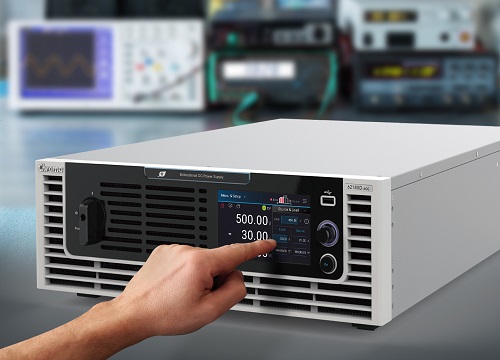
A Bidirectional Power Supply is an advanced power conversion system that allows electrical energy to flow in two directions. Unlike conventional power supplies that only deliver energy to a connected load, a bidirectional system can also absorb energy generated by the connected equipment.
This dual-direction operation makes it particularly useful for testing electric motors, motor drives, EV powertrains, batteries, and other regenerative electrical systems.
During motor testing, the power supply operates in two primary modes:
During normal motor operation, the bidirectional power supply delivers controlled electrical power to the motor drive. It provides the required DC voltage and current to operate the motor under predefined test conditions.
During braking or regenerative operation, the motor can act as a generator and return electrical energy through its drive to the DC bus. A bidirectional power supply absorbs this returned energy and, in regenerative configurations, feeds it back into the AC electrical network.
Modern electric motors are used in applications where acceleration, deceleration, braking, reversing, and variable operating loads are common. Testing these operating conditions requires a power system capable of managing changing energy requirements.
A bidirectional power supply provides greater flexibility by supporting both energy delivery and energy absorption. It also makes it possible to evaluate regenerative motor and drive performance under controlled testing conditions.
One of the major advantages of a bidirectional power supply is its ability to recover energy generated during regenerative motor operation.
When a motor decelerates or operates in generating mode, electrical energy can flow back through the motor drive. Instead of dissipating all this energy through braking resistors, a regenerative bidirectional power supply can return suitable energy to the electrical grid.
This helps improve energy utilization and can reduce electricity consumption in frequently repeated motor testing operations.
Motor testing facilities often conduct multiple tests involving different operating speeds, torque levels, and load conditions. A bidirectional power supply supports controlled power delivery and absorption, making it suitable for repeated testing sequences.
It helps engineers evaluate motor performance under different operating conditions without relying entirely on separate power supply and energy dissipation equipment.
Traditional motor test benches may use resistive braking systems to dissipate regenerated electrical energy as heat. This process results in energy wastage and may require additional cooling arrangements.
A regenerative bidirectional power supply offers an alternative by returning absorbed energy to the electrical supply when supported by the system architecture.
Accurate motor testing requires controlled electrical input and consistent operating conditions. A programmable bidirectional power supply allows engineers to configure voltage, current, and power parameters according to the testing requirements.
When integrated with suitable measurement instruments and a motor dynamometer, it can support detailed evaluation of:
Regenerative braking is an important feature in electric vehicles, industrial drives, and advanced motor control systems. During braking, the motor operates as a generator and converts mechanical energy into electrical energy.
A bidirectional power supply can absorb the returned electrical energy and support the evaluation of regenerative braking performance. This is particularly useful for testing EV traction motors, motor controllers, and regenerative drive systems.
Industrial motors operate under different speed and torque conditions depending on their applications. A bidirectional power supply can support testing scenarios involving both motoring and regenerative operation.
In suitable four-quadrant test configurations, engineers can evaluate forward motoring, forward generating, reverse motoring, and reverse generating conditions.
This provides a broader understanding of motor performance across different operating modes.
Conventional motor testing setups may require separate electronic loads or resistive braking arrangements to handle returned energy.
A bidirectional power supply combines power sourcing and power absorption capabilities in one system. When configured for regenerative operation, it can reduce the need for conventional energy-dissipating load banks.
This can simplify the test bench architecture and reduce additional cooling requirements associated with resistive braking systems.
Electric vehicle motors operate under varying speed, torque, acceleration, and regenerative braking conditions. Testing these motors requires flexible power conversion equipment capable of handling changing energy flow.
Bidirectional power supplies are useful in EV motor testing and powertrain validation environments where engineers need to evaluate motor controllers, traction inverters, and regenerative energy handling.
Modern motor testing facilities increasingly use automated test benches to improve repeatability and reduce manual intervention.
Programmable bidirectional power supplies can be integrated with suitable test controllers and measurement systems to execute predefined testing sequences.
Motor testing facilities that conduct high-power and repetitive testing can benefit from regenerative energy recovery. By returning absorbed energy to the electrical supply, a suitable bidirectional system can reduce energy wastage compared with conventional resistive braking arrangements.
Over time, reduced energy dissipation and potentially lower cooling requirements can contribute to improved operating economics. Actual savings depend on testing duration, regenerative duty cycle, system efficiency, electricity tariffs, and installation conditions.
Bidirectional power supplies are used in several industries where motors and power electronic systems require controlled testing and regenerative operation.
EV manufacturers and research facilities use bidirectional power supplies to test electric traction motors, motor controllers, and inverter systems. These systems help evaluate power consumption, regenerative braking, and motor performance under different operating conditions.
Manufacturing companies use motor testing systems to evaluate induction motors, synchronous motors, and other industrial motor technologies. Bidirectional power supplies support controlled electrical input and regenerative energy handling during testing.
Variable Frequency Drives and motor inverters require testing under different electrical and operating conditions. Bidirectional power supplies help provide controlled DC power and absorb returned energy in compatible testing configurations.
Electrical engineering laboratories use advanced power supplies to study motor characteristics, develop new motor technologies, and validate power conversion systems.
Automotive testing facilities evaluate electric motors, traction inverters, and other electrical components used in modern vehicles. Bidirectional power systems support testing procedures involving changing power flow and regenerative operation.
The main difference between a bidirectional power supply and a conventional power supply is the direction of electrical energy flow.
| Parameter | Bidirectional Power Supply | Conventional Power Supply |
|---|---|---|
| Power Flow | Supports power delivery and absorption | Primarily delivers power to the load |
| Regenerative Operation | Supported in suitable configurations | Generally requires additional equipment |
| Energy Recovery | Possible with regenerative capability | Not generally available |
| Motor Testing | Suitable for motoring and regenerative testing | Suitable primarily for power supply requirements |
| System Flexibility | Higher for applications with reverse power flow | Depends on external equipment |
| Energy Utilization | Can reuse recovered electrical energy | Returned energy may require separate handling |
Selecting the right power supply for motor testing requires careful evaluation of the motor specifications, testing objectives, and electrical infrastructure.
Choose a power supply that supports the required voltage and current ratings of the motor drive or equipment under test.
Evaluate the continuous and peak power requirements of the motor testing application. The selected system should support the expected operating and regenerative power levels.
Check whether the power supply can absorb returned electrical energy and whether it supports regeneration back to the AC grid.
Consider programmable voltage, current, power settings, operating modes, and communication interfaces required for automated testing.
Ensure that the system provides suitable overvoltage, overcurrent, overtemperature, and short-circuit protection according to the application requirements.
Evaluate compatibility with motor drives, dynamometers, test controllers, measurement instruments, and other test bench equipment.
Modern industrial and automotive testing environments require advanced power conversion technologies that support efficient energy management and reliable operation.
Darwin Motion AC Drive manufacturer focuses on advanced power electronics and industrial automation solutions designed for evolving application requirements.
Darwin Motion offers bidirectional power supply solutions for applications involving controlled power delivery, energy absorption, and regenerative power management.
Discover the Bidirectional power supply for motor testing from Darwin Motion to understand how bidirectional power conversion can support modern motor testing and industrial power applications.
Motor testing is becoming more advanced as industries adopt electric vehicles, automated manufacturing systems, and high-performance motor technologies. Conventional power supplies may not provide the flexibility required for applications involving regenerative energy and reverse power flow.
A bidirectional power supply addresses this requirement by supporting both power delivery and energy absorption. With regenerative capability, it can recover electrical energy during motor braking and generating operations, helping reduce energy wastage and improve testing efficiency.
From EV traction motor validation to industrial motor drive testing, bidirectional power supplies offer a flexible solution for modern testing environments.
As a Darwin Motion AC Drive manufacturer, Darwin Motion provides advanced power conversion solutions for industries looking to improve energy utilization and optimize electrical testing applications.
Looking for an advanced power conversion solution for your testing requirements? Explore the Bidirectional power supply for motor testing and discover the possibilities of efficient power management and regenerative energy recovery with Darwin Motion.