

Posted on 4th Nov 2026
The electric vehicle (EV) industry is growing rapidly as manufacturers focus on sustainable transportation, advanced battery technologies, and energy-efficient mobility solutions. At the heart of every electric vehicle is its battery system, which determines vehicle performance, driving range, charging time, and overall reliability. To ensure battery safety and performance, manufacturers require advanced testing equipment that can accurately evaluate battery characteristics under different operating conditions.
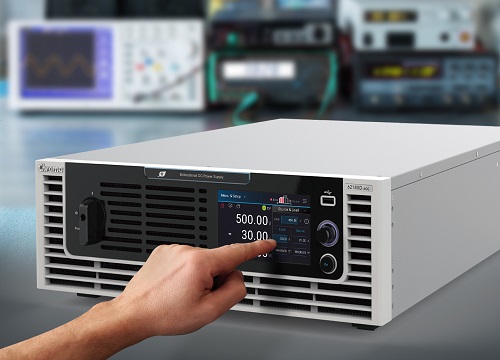
One of the most important technologies used in modern EV testing laboratories is the Bidirectional power supply for EV battery testing. This advanced power conversion system can both supply electrical energy to a battery and absorb energy during discharge operations. It provides a controlled environment for evaluating battery performance while enabling energy recovery and improving testing efficiency.
Darwin Motion, an established AC Drive Manufacturer, focuses on industrial automation, advanced drive technologies, and energy-efficient power solutions. Its expertise in industrial drive and regenerative technologies is relevant to applications where controlled power conversion and energy management are essential.
A bidirectional power supply is an advanced electrical power conversion device that allows energy to flow in two directions. In EV battery testing, it can operate in charging mode by supplying electrical energy to a battery and in discharging mode by absorbing electrical energy from the battery.
Unlike conventional power supplies that generally deliver power in only one direction, bidirectional power supplies support both sourcing and sinking operations. This capability makes them highly useful for testing rechargeable battery packs, battery modules, and individual battery cells.
During battery testing, the bidirectional power supply controls voltage and current according to predefined test parameters. It can simulate different charging and discharging conditions to evaluate the battery's electrical characteristics.
In charging mode, the bidirectional power supply delivers controlled electrical energy to the battery. Engineers can adjust charging voltage and current to evaluate charging performance, capacity, and response under different conditions.
In discharging mode, the power supply absorbs electrical energy from the battery. This allows engineers to measure discharge characteristics, capacity, voltage stability, and energy delivery performance.
One of the most significant advantages of bidirectional power technology is regenerative energy recovery. Instead of converting all the energy released during battery discharge into heat, a regenerative system can return usable energy to the electrical grid or a compatible DC bus, depending on its design.
EV batteries undergo several testing procedures before they are integrated into electric vehicles. These procedures help manufacturers verify battery capacity, charging efficiency, discharge performance, temperature behavior, and operational reliability.
A bidirectional power supply simplifies these testing processes by supporting controlled charging and discharging operations through a single power conversion platform.
Bidirectional power supplies are used in various EV battery research, manufacturing, and testing environments. Their ability to manage electrical energy in both directions makes them suitable for several battery evaluation applications.
Battery charging and discharging tests are essential for understanding the electrical performance of EV battery systems. A bidirectional power supply can execute controlled charge and discharge cycles to evaluate battery capacity, voltage response, and energy efficiency.
Battery capacity testing determines how much electrical energy a battery can store and deliver. Bidirectional power systems provide controlled current and voltage conditions that help engineers measure battery capacity under specified test parameters.
Cycle life testing evaluates how a battery performs after repeated charging and discharging operations. Bidirectional power supplies automate these cycles and help researchers analyze battery degradation, capacity retention, and long-term performance.
EV battery systems contain multiple cells arranged into modules and battery packs. Bidirectional power supplies can be integrated into testing setups to evaluate these assemblies under different electrical load conditions.
The Battery Management System monitors important battery parameters, including voltage, current, temperature, and state of charge. Bidirectional power supplies can simulate controlled electrical conditions to support BMS functional testing and validation.
EV battery research laboratories use bidirectional power supplies to investigate new battery chemistries, charging technologies, energy storage systems, and advanced battery management techniques.
Traditional battery testing systems may dissipate discharge energy as heat. Regenerative bidirectional power supplies can return recovered energy to the electrical grid or another suitable power system, helping improve overall testing efficiency.
Continuous battery testing can consume significant electrical energy. By recovering energy during discharge cycles, regenerative systems can reduce the net electricity consumption of testing facilities.
Accurate control of electrical parameters is essential for reliable battery testing. Bidirectional power supplies provide programmable voltage and current settings that allow engineers to perform tests according to specific battery requirements.
Modern bidirectional power supplies can be integrated with automation systems and testing software. This enables programmable test sequences, data collection, monitoring, and repeatable testing procedures.
A single bidirectional power system can perform charging and discharging operations, reducing the need for separate power equipment for different testing functions.
Selecting the right bidirectional power supply is important for achieving accurate, reliable, and efficient battery testing results. Manufacturers and research laboratories should evaluate the following technical specifications before choosing a system.
The power supply should support the voltage and current requirements of the battery cells, modules, or complete battery packs being tested.
The rated power capacity should match the maximum charging and discharging requirements of the application.
The system should support both power sourcing and power sinking modes with appropriate control and protection features.
For energy-efficient testing, evaluate whether the power supply supports regenerative operation and whether recovered energy can be returned to the grid or DC bus.
Accurate voltage and current regulation are important for battery characterization, capacity measurement, and repeatable testing.
Compatibility with communication protocols and automated testing systems helps integrate the power supply into modern EV battery testing laboratories.
Battery testing equipment should include suitable protection against overvoltage, overcurrent, overheating, short circuits, and abnormal operating conditions. Appropriate isolation and emergency shutdown provisions should also be considered.
Choosing the right industrial technology partner is essential for businesses that require reliable power conversion, motor control, and energy-efficient automation solutions.
Darwin Motion is an established AC Drive Manufacturer specializing in industrial automation products, Variable Frequency Drives (VFDs), Servo Drives, and advanced motor control technologies. The company focuses on delivering solutions that support industrial productivity, operational efficiency, and modern automation requirements.
Darwin Motion's industrial drive technologies and regenerative solutions are relevant to applications where energy recovery, controlled motor operation, and efficient electrical power management are important.
For EV battery testing applications, it is important to select equipment specifically designed and rated for bidirectional battery power conversion. An industrial AC drive or regenerative motor drive is not automatically interchangeable with a dedicated EV battery testing power supply. The required voltage range, current capacity, control accuracy, isolation, and protection features must be verified.
Both conventional and bidirectional power supplies are used in electrical testing applications. However, their operating capabilities and energy management functions are different.
The future of bidirectional power supply technology is closely associated with the expansion of electric mobility and advancements in battery energy storage. As EV manufacturers develop batteries with higher capacities, faster charging capabilities, and improved energy density, the demand for advanced testing equipment will continue to grow.
A bidirectional power supply for EV battery testing is an important technology for modern electric vehicle development. By enabling controlled charging, discharging, and regenerative energy recovery, it helps battery manufacturers, research laboratories, and EV developers evaluate battery performance more efficiently.
Its advantages include improved energy utilization, accurate electrical control, automated testing, reduced operating costs, and flexible battery evaluation. As electric mobility continues to expand, bidirectional power conversion will play an increasingly important role in EV battery development and testing infrastructure.
Darwin Motion, an established AC Drive Manufacturer, contributes to the broader industrial automation and energy-efficient drive technology sector through its focus on VFDs, servo drives, and regenerative drive solutions. Businesses exploring advanced industrial power management technologies can consider Darwin Motion for their industrial drive and automation requirements.
To learn more about bidirectional power supply technology and its applications, visit the following page:
Bidirectional Power Supply – Darwin Motion
It is an electrical power conversion system that can both supply energy to an EV battery during charging and absorb energy from the battery during discharging.
It enables controlled charging and discharging, battery capacity measurement, cycle life testing, and regenerative energy recovery.
Yes. Regenerative bidirectional systems can recover energy during discharge testing and return it to the electrical grid or a suitable DC bus, reducing net energy consumption.
Depending on their voltage, current, power, and control specifications, bidirectional power supplies can be used for testing lithium-ion batteries and other rechargeable battery technologies.
Regenerative energy recovery is the process of capturing electrical energy released during battery discharge and transferring it back to a suitable power source instead of dissipating it entirely as heat.
A conventional DC power supply generally delivers energy to a load, whereas a bidirectional DC power supply can both deliver and absorb electrical energy.
Important factors include voltage range, current capacity, power rating, regenerative capability, control accuracy, communication interfaces, and electrical safety features.
Darwin Motion is an AC Drive Manufacturer specializing in industrial automation, VFDs, servo drives, and regenerative drive technologies designed to support efficient industrial motor control and power management.