

Posted on 11th Nov 2026
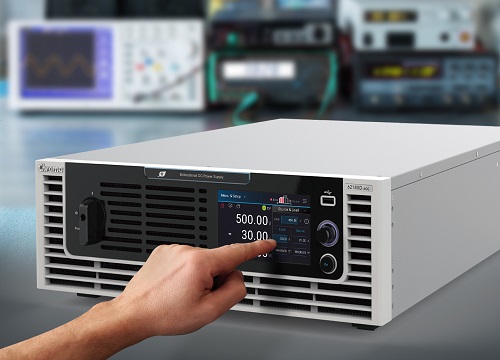
With the rapid growth of electric vehicles, battery energy storage systems, renewable energy installations, and advanced industrial automation, efficient power conversion has become increasingly important. Modern applications require power systems that can not only deliver electrical energy to batteries but also receive energy back from them. This requirement has increased the importance of bidirectional power supply technology.
A Bidirectional power supply for battery charging and discharging is an advanced power conversion solution that enables electrical energy to flow in both directions. It can supply controlled power to charge a battery and subsequently draw power from the battery during discharging operations. This technology improves energy utilization, supports battery testing, and enables regenerative energy management.
As a Darwin Motion AC Drive manufacturer, Darwin Motion focuses on industrial power conversion and advanced electrical solutions designed to meet evolving industry requirements. Bidirectional power conversion technology plays an important role in developing efficient and flexible energy management systems for modern industrial applications.
A bidirectional power supply is an electronic power conversion system designed to transfer electrical energy between two sources in both directions. Unlike a conventional power supply, which generally delivers power in only one direction, a bidirectional system can operate in both charging and discharging modes.
During charging, the system converts input electrical power into the required DC output to charge a battery. During discharging, it accepts electrical energy from the battery and transfers it back to the connected power source, DC bus, or electrical network, depending on the system configuration.
This two-way power transfer capability makes bidirectional power supplies useful in applications where batteries must be repeatedly charged, discharged, tested, or integrated with energy storage systems.
A bidirectional power supply operates through advanced power electronic converters and intelligent control systems. It manages the direction, voltage, current, and power flow according to the selected operating mode.
The system typically consists of power semiconductor switches, inductors, capacitors, control circuits, sensors, and protection mechanisms. Depending on the application, it may use an isolated or non-isolated converter topology.
During charging mode, electrical energy flows from the input power source towards the battery. The converter regulates the output voltage and current according to the battery specifications and charging requirements.
Common charging functions include:
During discharging mode, the direction of power flow is reversed. Electrical energy stored in the battery is converted and transferred towards the receiving power system.
Depending on the design, the recovered energy can be returned to the AC grid, transferred to a DC bus, or supplied to another compatible electrical load.
Important functions include:
Advanced bidirectional power supplies can switch between charging and discharging modes through programmable control commands. The control system monitors operating parameters and manages the transition to ensure stable power conversion.
This flexibility is particularly useful in battery testing laboratories, energy storage systems, and regenerative industrial applications.
Understanding the difference between conventional and bidirectional power supplies helps industries select the right power conversion technology.
| Parameter | Conventional Power Supply | Bidirectional Power Supply |
|---|---|---|
| Power Flow | Generally one direction | Both directions |
| Battery Charging | Supported | Supported |
| Battery Discharging | Generally not supported as a power recovery function | Supported |
| Energy Recovery | Usually limited | Possible through regenerative operation |
| Battery Testing | Limited functionality | Supports charge-discharge testing |
| Control Flexibility | Primarily output regulation | Programmable two-way power control |
| Applications | General DC power applications | Battery testing, energy storage, EVs, and regenerative systems |
Bidirectional power conversion offers several advantages for industries that depend on rechargeable batteries, energy storage, and controlled electrical power transfer.
One of the major advantages is the ability to recover electrical energy during battery discharging. Instead of dissipating the discharged energy as heat through conventional resistive loads, regenerative systems can transfer usable energy back to a compatible source or electrical network.
Battery manufacturers and testing laboratories require repeated charging and discharging cycles to evaluate battery performance. Bidirectional power supplies make this process more flexible by supporting programmable charge and discharge operations.
In regenerative configurations, recovered electrical energy can be reused instead of being converted entirely into heat. This can reduce energy consumption during repetitive testing and other suitable operating cycles.
The ability to control power flow in both directions provides flexibility in applications involving batteries, DC buses, renewable energy sources, and energy storage systems.
Modern bidirectional systems can incorporate digital monitoring, programmable operating modes, voltage regulation, current limiting, and protective functions to support reliable operation.
Bidirectional power supplies are increasingly used in industries where batteries and electrical energy storage play an important role. Their ability to transfer power in both directions makes them suitable for various testing, development, and energy management applications.
Electric vehicle battery packs require extensive testing to evaluate charging characteristics, discharge performance, capacity, efficiency, and operational reliability.
Bidirectional power supplies allow testing facilities to perform controlled charging and discharging cycles while monitoring important electrical parameters. Regenerative models can also recover discharge energy for reuse.
Battery manufacturers require reliable testing equipment for evaluating cells, modules, and complete battery packs. Bidirectional power supplies support repeated charge-discharge cycling and help automate battery validation processes.
Battery energy storage systems store electricity during periods of surplus generation and release it when demand increases. Bidirectional power conversion enables controlled energy transfer between batteries and compatible AC or DC electrical systems.
Solar and wind power installations often integrate battery storage to improve energy availability and manage variations in renewable generation. Bidirectional converters enable batteries to absorb surplus energy and deliver stored energy when required.
Research laboratories working on battery technologies, power electronics, and energy storage require programmable power systems for testing different operating conditions. Bidirectional power supplies offer flexible control over voltage, current, and power direction.
Industries using DC power buses, regenerative equipment, and energy storage installations can use bidirectional power conversion to manage electrical energy efficiently and support controlled power exchange between compatible systems.
Selecting the right bidirectional power supply requires an understanding of the battery specifications, operating environment, and power conversion requirements.
The voltage and current ratings should match the battery or DC system requirements. The selected equipment should support the complete operating range required during charging and discharging.
Evaluate the maximum charging and discharging power requirements. Both operating directions should be considered when selecting the system capacity.
High conversion efficiency helps reduce energy losses during power transfer. In regenerative applications, evaluate efficiency in both power flow directions.
Programmable control, digital monitoring, and suitable communication interfaces can simplify integration with automated battery testing systems and industrial controllers.
Look for appropriate protection against overvoltage, overcurrent, overheating, short circuits, and abnormal battery operating conditions. Battery management system (BMS) coordination is also important.
Depending on the application, galvanic isolation may be required. The choice between isolated and non-isolated conversion depends on voltage levels, safety requirements, and system architecture.
Modern industries require power conversion solutions that combine operational flexibility, reliable performance, and efficient energy management. Choosing an experienced technology provider is important when implementing advanced electrical systems.
Darwin Motion AC Drive manufacturer focuses on industrial electrical and power conversion technologies designed to support modern industrial requirements. With increasing demand for battery testing, regenerative power management, and energy storage applications, bidirectional power supply technology represents an important area of industrial power innovation.
Industries looking for advanced two-way power conversion technology can explore the Bidirectional power supply for battery charging and discharging solutions from Darwin Motion.
The demand for bidirectional power conversion is expected to grow alongside electric mobility, battery energy storage, renewable energy integration, and smart industrial power systems.
As battery technologies continue to evolve, industries will increasingly require flexible power conversion equipment capable of handling programmable charging, controlled discharging, and regenerative energy recovery.
Bidirectional power supply technology is transforming how industries manage battery charging, discharging, and electrical energy recovery. By enabling controlled two-way power flow, these systems offer significant advantages for battery testing, electric vehicle development, renewable energy integration, and industrial energy storage.
Unlike conventional power supplies, bidirectional systems can transfer energy in both directions, allowing discharged battery energy to be recovered and reused in suitable system configurations. This capability can improve energy utilization, reduce testing-related energy wastage, and provide greater flexibility in industrial power management.
As a Darwin Motion AC Drive manufacturer, Darwin Motion is associated with the development of industrial drive and power conversion solutions. Businesses exploring advanced battery charging and discharging technologies can consider Darwin Motion's bidirectional power supply solutions for their industrial requirements.
It is a power conversion system that allows electrical energy to flow in both directions. It can charge a battery by supplying electrical power and discharge it by transferring stored energy to a compatible receiving system.
A unidirectional power supply generally transfers energy in one direction, whereas a bidirectional power supply supports both charging and discharging operations.
Yes. A regenerative bidirectional power supply can transfer discharged battery energy back to a compatible AC grid or DC bus instead of dissipating it entirely as heat.
They are used in electric vehicle battery testing, battery manufacturing, energy storage systems, renewable energy installations, research laboratories, and regenerative industrial applications.
The main benefits include two-way power transfer, controlled battery cycling, regenerative energy recovery, flexible power management, and improved energy utilization.
Yes. They are suitable for controlled charging and discharging of EV batteries and can support battery performance, capacity, and efficiency testing.
Consider battery voltage, current, power rating, conversion efficiency, control requirements, isolation, protection features, and the intended charging and discharging cycles.
Visit Darwin Motion's Bidirectional Power Supply page to explore the solution for battery charging and discharging applications.