
Posted on 3rd Nov 2026
Modern industries depend on advanced electrical equipment, automation systems, Variable Frequency Drives (VFDs), servo drives, UPS systems, and other power electronic devices to maintain efficient production operations. Although these technologies improve productivity and energy efficiency, they can also generate electrical harmonics that negatively affect power quality.
Poor power quality can lead to equipment overheating, increased energy losses, unexpected machine failures, reduced equipment lifespan, and costly production downtime. To overcome these challenges, industries increasingly adopt an Active Harmonic Filter as an effective solution for managing harmonic distortion and improving electrical system performance.
As a trusted Darwin Motion AC Drive Manufacturer, Darwin Motion provides advanced industrial power quality solutions designed to improve electrical reliability, reduce harmonic disturbances, and support efficient industrial operations.
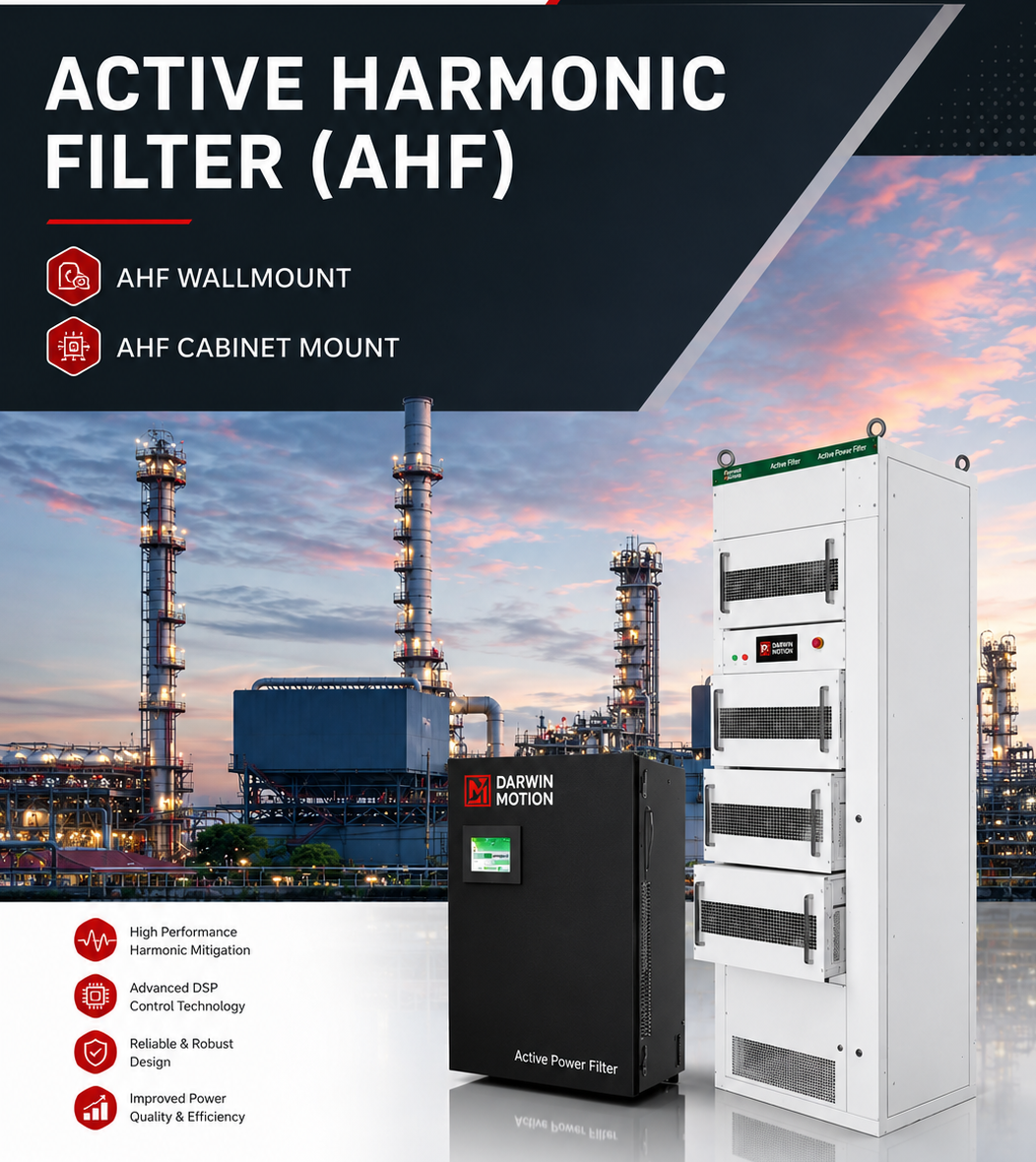
An Active Harmonic Filter (AHF) is an advanced electronic device designed to detect and compensate for unwanted harmonic currents in an electrical distribution system. It continuously monitors electrical current and identifies harmonic components generated by nonlinear electrical loads.
Once these harmonics are detected, the filter generates and injects equal and opposite compensating currents into the electrical network. This process reduces harmonic distortion and helps restore a cleaner current waveform.
Unlike conventional passive harmonic filters, active harmonic filters can dynamically respond to changing electrical loads. This makes them particularly useful in modern industrial facilities where machinery, motors, and automation equipment operate under varying load conditions.
Harmonic distortion is commonly generated by electrical equipment that draws non-sinusoidal current from the power supply. Some major sources include:
Power quality plays an essential role in maintaining the reliability and efficiency of industrial electrical systems. Manufacturing plants operate multiple machines simultaneously, and even minor electrical disturbances can affect production performance.
Excessive harmonic distortion can create several operational challenges, including:
Installing an appropriately designed active harmonic filtering solution helps industries minimize these problems and maintain more stable electrical operations.
An Active Harmonic Filter operates using advanced power electronics, current sensors, and digital signal processing technology. It continuously monitors the electrical network and compensates for unwanted harmonic currents in real time.
The filter uses current sensors to monitor the electrical current flowing through the distribution system. It continuously analyzes the waveform to identify harmonic distortion.
Advanced digital controllers identify the harmonic components present in the electrical current and determine the compensation required to reduce distortion.
The filter's power electronic converter generates compensating currents with characteristics opposite to the detected harmonic components.
The compensating currents are injected into the electrical network, reducing unwanted harmonic currents and improving the overall current waveform.
The system continuously monitors changing load conditions and adjusts compensation accordingly. This allows the filter to maintain effective harmonic mitigation even when industrial equipment operates at different load levels.
An appropriately selected Active Harmonic Filter provides several advantages for industrial facilities. It improves electrical performance while helping protect valuable equipment and reduce unnecessary operational expenses.
One of the primary benefits of an active harmonic filter is reducing Total Harmonic Distortion (THD). By compensating for unwanted harmonic currents, the filter helps maintain cleaner electrical waveforms and improves power quality.
Certain active harmonic filters also provide reactive power compensation. This capability helps improve the overall power factor of industrial electrical systems and can reduce reactive power demand.
Excessive harmonic currents contribute to additional electrical losses in transformers, cables, and distribution equipment. Reducing these currents can help minimize avoidable losses and improve overall system efficiency.
Electrical equipment exposed to excessive harmonic distortion may experience additional thermal and electrical stress. By reducing harmonic disturbances, an active filtering solution helps support the reliable operation of transformers, motors, generators, and other connected equipment.
Improved power quality can help minimize harmonic-related equipment problems, unexpected interruptions, and maintenance requirements. This supports more reliable production operations.
Unlike fixed passive filtering solutions, active harmonic filters can automatically respond to changing electrical load conditions. This makes them suitable for manufacturing facilities with frequently changing power requirements.
Choosing the right power quality solution is important for industries that depend on reliable electrical distribution and automated production equipment.
Darwin Motion AC Drive Manufacturer focuses on advanced motor control, industrial automation, and electrical power quality technologies. The company provides intelligent Active Harmonic Filter solutions designed to address harmonic distortion and improve electrical system performance in demanding industrial environments.
Darwin Motion's Active Harmonic Filter continuously monitors electrical conditions and generates compensating currents to reduce unwanted harmonics. Its solutions are designed to support harmonic mitigation, reactive power compensation, and three-phase load balancing.
Darwin Motion offers different active harmonic filter configurations for industrial power quality applications. Representative published specifications include:
Actual performance depends on system configuration, load characteristics, filter sizing, and installation conditions. Consult the manufacturer for application-specific technical details.
Active harmonic filters are useful in industrial and commercial facilities where nonlinear electrical loads generate harmonic distortion. They help improve power quality and support reliable equipment operation.
Both active and passive harmonic filters are used to reduce harmonic distortion. However, they operate differently and are suitable for different electrical applications.
The right choice depends on harmonic measurements, electrical system configuration, operating conditions, installation budget, and long-term power quality requirements.
Selecting the correct filter is essential for achieving effective harmonic compensation and reliable electrical performance. Before installing an active harmonic filter, industries should evaluate several technical factors.
Darwin Motion combines expertise in industrial AC drives, motor control, and power quality technologies to support modern industrial electrical requirements.
As a Darwin Motion AC Drive Manufacturer, the company offers solutions designed to help industries improve electrical efficiency, manage harmonic disturbances, and maintain reliable operations.
Businesses looking to improve their electrical infrastructure can explore Darwin Motion's advanced harmonic mitigation technology and identify a suitable solution for their specific application requirements.
Maintaining good power quality is essential for modern industrial operations. Harmonic distortion generated by VFDs, UPS systems, servo drives, and other nonlinear electrical equipment can increase energy losses, create equipment stress, and affect production reliability.
An Active Harmonic Filter provides an effective way to address these challenges by continuously monitoring electrical conditions and injecting compensating currents to reduce harmonic distortion. Additional capabilities such as reactive power compensation and three-phase load balancing can further improve electrical system performance.
Darwin Motion AC Drive Manufacturer offers advanced Active Harmonic Filter solutions designed to support industrial power quality improvement, equipment reliability, and energy-efficient operations. Investing in an appropriately selected harmonic filtering solution can help industries build a more stable, efficient, and reliable electrical infrastructure.
The main purpose of an Active Harmonic Filter is to detect and compensate for unwanted harmonic currents in an electrical system, thereby reducing harmonic distortion and improving power quality.
It continuously monitors electrical current, identifies harmonic components, and injects equal and opposite compensating currents to reduce distortion and improve the current waveform.
Industries such as automotive, steel, cement, textile, pharmaceutical, food processing, water treatment, and data centers can benefit from active harmonic filtering when their electrical systems experience harmonic distortion.
Yes. Active harmonic filters equipped with reactive power compensation functionality can help improve power factor while reducing harmonic currents.
An active harmonic filter electronically generates compensating currents and dynamically responds to changing loads. A passive harmonic filter uses inductors and capacitors to filter specific harmonic frequencies.
Darwin Motion provides industrial power quality solutions featuring real-time harmonic compensation, intelligent digital control, reactive power compensation, and three-phase load balancing capabilities.
Yes. By reducing harmonic currents, an appropriately designed filter can minimize additional electrical losses in transformers, cables, and other distribution equipment.
Looking for an effective solution to improve industrial power quality and reduce harmonic distortion? Explore the advanced Active Harmonic Filter solutions from Darwin Motion and discover technologies designed for modern industrial electrical systems.